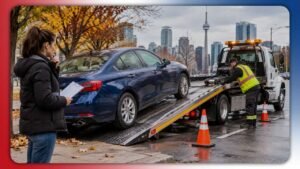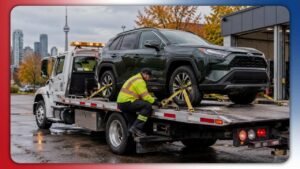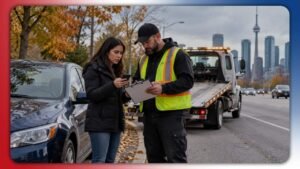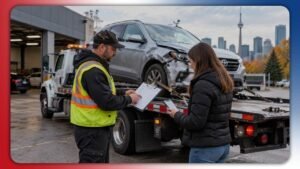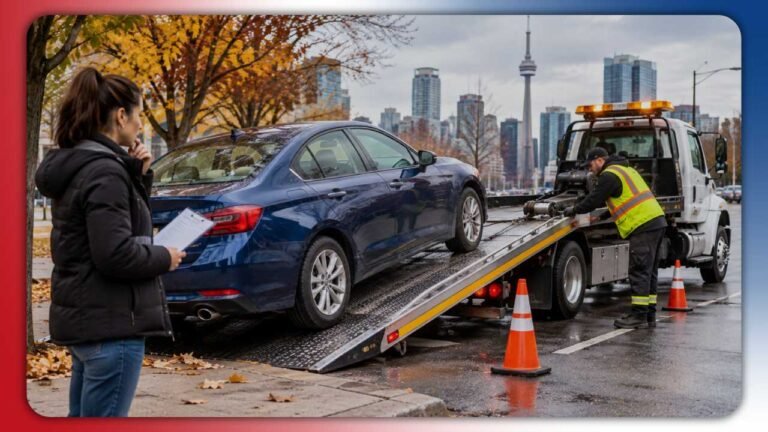

During a winter breakdown GTA emergency, move to a safe position, activate hazard lights, and request the correct roadside help. Call 911 for immediate danger; use 511 for eligible highway tow-zone assistance when your vehicle is safely stopped.
Heavy snow creates different problems on Highway 401, suburban streets, and private driveways. Your location determines the safest response. A stalled battery needs different equipment from a vehicle lodged in a snowbank. Follow the steps below before arranging transport.
First Actions During a Winter Breakdown GTA Emergency
Your first priority is protection from moving traffic, not diagnosing the engine. Signal carefully and steer toward a safe shoulder or parking area when your vehicle still moves. Never stop intentionally in a live lane to inspect a mechanical fault.
Move Away From Active Traffic
Pull as far from traffic as conditions safely allow. Choose a level, visible location rather than an icy curve. Activate hazard lights and note the nearest exit, kilometre marker, or intersection. Keep your seat belt fastened while assessing nearby traffic.
Stay inside when your vehicle provides safe shelter away from traffic. Leave only when a clearly safer location exists beyond traffic. Never stand in front of the vehicle, behind the bumper, or beside a live lane.
Call 911 for Immediate Danger
Call 911 when a collision causes injuries, your vehicle blocks a travelled lane, or approaching traffic creates immediate danger. Explain any smoke, leaking fuel, or medical concern. Emergency dispatch will assess the situation and direct appropriate support.
Use normal towing dispatch for a non-emergency on an ordinary street. Confirm your precise position before describing vehicle damage. Operators need safe access, especially during whiteout conditions and snowplow operations.
Snowstorm Hazards That Cause a Winter Breakdown GTA
Cold temperatures increase battery strain, while packed snow and black ice reduce traction. A winter breakdown GTA incident can involve mechanical failure, immobilization, or collision damage. Each situation requires its own response.
Dead Batteries and Frozen Starting Systems
A weak 12-volt battery struggles during cold starts. Repeated cranking drains remaining charge and increases your need for a battery boost. Stop repeated attempts after the starter slows or clicking replaces normal cranking.
Tell dispatch whether your dashboard lights work and whether the engine turns. Report warning indicators and unusual smells. A technician can assess a battery boost before deciding whether the vehicle needs towing.
Loss of Traction and Snowbank Entrapment
Packed snow can trap tires while ice prevents forward movement. Avoid prolonged wheel spinning because spinning tires deepen ruts. Use a shovel and traction mats only when you can work away from moving traffic.
Do not crawl under a stuck vehicle or connect recovery ropes without proper training. An unsuitable attachment point can break during pulling. Professional recovery equipment becomes necessary when the underbody rests on packed snow.
Safe Waiting Practices During Severe Winter Weather
Wait in a safe location, conserve body heat, and keep your phone available. Carbon monoxide and approaching traffic create the biggest immediate dangers. Assess the location before deciding whether to remain inside the vehicle.
Avoid Carbon Monoxide Inside the Vehicle
Clear a blocked exhaust outlet only when you can do so safely, away from moving traffic. Never idle with snow packed around the tailpipe. Open a window slightly for ventilation when running the engine briefly.
Turn the engine off if you cannot confirm a clear exhaust path. Use blankets, insulated clothing, and hand warmers for warmth. Never use a fuel-burning stove inside the cabin. Headaches and dizziness require immediate fresh air and emergency help.
Protect Children, Passengers and Pets
Keep infants and children warm with dry clothing and suitable blankets. Secure pets in carriers or with harnesses. Tell dispatch how many people need transport and whether someone has mobility limitations.
Share your location with a trusted contact while conserving mobile battery. Keep a charged power bank in the passenger area. Avoid walking through a whiteout to find a garage, shop, or bus stop.
Ontario Highway Tow Zones and Emergency Contacts
Ontario operates restricted towing zones along selected provincial highways in the Greater Toronto and Hamilton Area. A winter breakdown GTA call requires different contact choices inside these zones. The Ministry of Transportation publishes zone boundaries.
Use 511 Inside Restricted Tow Zones
Call 511 for towing when your vehicle rests safely inside a restricted towing zone. Call 911 if your vehicle blocks a travelled lane or the situation presents immediate danger. Authorized tow operators manage restricted-zone removals.
Approved roadside assistance memberships have limited exceptions for qualifying light-vehicle breakdowns on the right shoulder. Collisions and left-shoulder incidents follow restricted-zone dispatch rules. Confirm zone status using the Ontario 511 map before requesting ordinary towing.
Use a Towing Provider Outside Restricted Zones
Contact a certified towing company directly when your breakdown occurs outside restricted zones. Give the dispatcher your location, vehicle type, and destination. For collision damage, review accident vehicle towing service before choosing suitable transport.
Do not assume a privately dispatched tow truck can enter every provincial highway zone. Discuss 511 directions with dispatch if highway restrictions apply. Towing access depends on roadway controls and police directions.
Winter Roadside Help Compared With Vehicle Recovery
Choose roadside assistance for a repairable roadside problem and recovery towing for an immobilized or unsafe vehicle. A winter breakdown GTA service request should describe the mechanical problem before specifying equipment.
Battery Boost and Tire Assistance
A battery boost helps when the 12-volt battery lacks starting power but the vehicle otherwise operates safely. A tire change suits an accessible vehicle with a usable spare. A fuel delivery can address an empty tank on suitable roads.
Ask about Toronto roadside assistance options for battery boosts, lockouts, and tire-related roadside help. Your vehicle still needs towing when mechanical faults or road hazards prevent safe travel.
Flatbed Towing and Winch Recovery
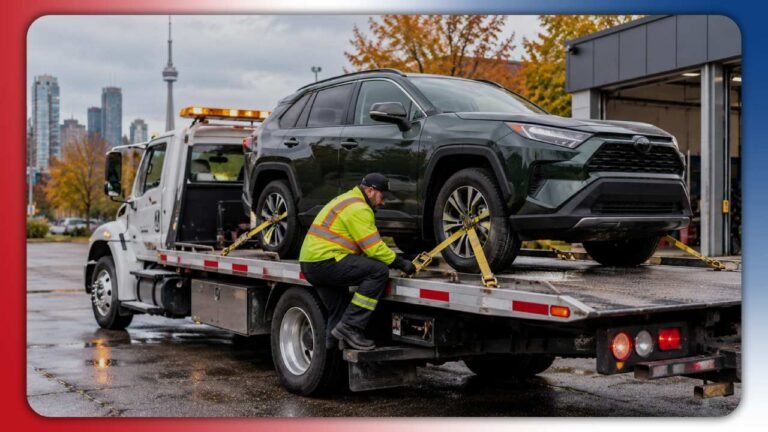
A flatbed carrier lifts the vehicle completely off the roadway during transport. Winch recovery moves a stuck vehicle to stable ground using rated professional equipment. Operators select the method after examining vehicle weight, damage, and access.
Tell dispatch about all-wheel drive, low ground clearance, disabled steering, or a locked transmission. Manufacturers publish towing procedures that protect drivetrain components. Never request improvised pulling using ordinary rope on a busy roadside.
Winter storms can delay truck access until road crews clear lanes. Avoid assuming a fixed arrival window during highway closures. Ask dispatch for an updated estimate and a safer waiting plan.
Important Details to Give a Winter Tow Dispatcher
Accurate location and vehicle condition help dispatch select equipment and a safe route. A winter breakdown GTA request becomes harder when snow obscures exit signs and parked vehicles. Provide 2 useful information groups: location and condition.
State Your Exact Roadside Location
Name the highway, direction, nearest exit, and side of the road. Example: Highway 401 eastbound near the Allen Road exit. Share your phone’s location pin when mobile service permits reliable mapping.
Report nearby landmarks such as a fuel station, interchange, or shopping centre. Add whether snowplows can reach your lane. Tell dispatch when traffic blocks access or visibility drops sharply.
Describe Vehicle Condition and Road Access
Identify the make, model, year, and approximate vehicle position. Describe a dead battery, flat tire, overheating engine, or stuck axle. Mention collision damage and whether wheels still turn.
Describe snow depth using both units when possible, such as 6 inches (15 cm) around the tires. Report standing water, steep grades, and narrow access. Provide the number of stranded passengers and their immediate needs.
Tell dispatch the preferred tow destination before the truck arrives. A repair shop, home driveway, and storage yard have different access conditions. Confirm whether the destination can accept your vehicle during the storm.
Winter Breakdown GTA Towing Rights and Service Costs
Ontario requires certified towing operators and provides consumer protections around consent, rates, and destinations. A winter breakdown GTA call should include a clear price discussion before work begins. Severe weather does not cancel your basic consumer rights.
Review Towing Consent and Destination
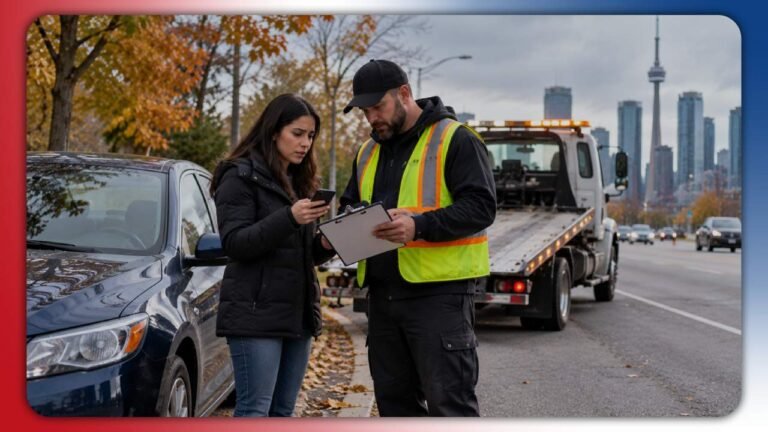
Ask for the company name, operator certificate details, and towing consent form. Read the destination and services before signing. Do not sign blank paperwork or agree to a destination you did not choose.
You generally choose your tow provider and destination outside restricted-zone or official-authority exceptions. Police-directed towing and restricted highway operations involve additional rules. Retain the invoice, consent document, and photographs.
Request a Written Quote Before Loading
Ask dispatch for the maximum-rate schedule and an itemized estimate. Confirm whether the quote covers loading, distance, winching, waiting, and storage. Ask who pays if the insurance policy includes roadside coverage.
The business website does not publish a verified universal winter breakdown rate. No fixed winter-towing price applies to every incident. Vehicle weight, location, recovery work, and authorized service conditions change the final quote.
Toronto Police publishes separate police-authorized contract towing rates. Those rates do not automatically apply to your voluntary private towing request. Compare the operator’s approved maximum rates and written estimate before accepting service.
Winter Emergency Kit and Vehicle Maintenance Checklist
A complete kit helps you remain warm, visible, and contactable until rescue arrives. Inspect the kit before your first winter trip. Transport Canada and Ontario recommend food, water, light, warmth, and basic traction supplies.
Pack Warmth and Visibility Supplies
Carry 1 charged power bank, 1 flashlight, 1 reflective vest, 1 shovel, and an insulated blanket per passenger. Store dry gloves, winter boots, and non-perishable snacks. Keep a small quantity of sand or traction mats for safe off-road use.
Pack a first-aid kit and snow brush in reachable storage. Keep your phone charger inside the cabin, not buried under luggage. Avoid using roadside warning triangles where approaching traffic makes placement dangerous.
Inspect Tires, Battery and Washer Fluid
Install 4 matching winter tires with the three-peak mountain snowflake marking. Check tire pressure regularly during cold spells. Inspect tread, battery condition, windshield wipers, lamps, and coolant before travel.
Ontario recommends keeping the fuel tank at least half full. Choose windshield washer fluid rated to -40°C (-40°F). Review Ontario 511 alerts and weather warnings before a long drive.
Cold conditions also reduce electric-vehicle driving range. Charge before a storm and plan an alternative charging stop. Tell roadside dispatch whether your electric vehicle has a depleted high-voltage battery or 12-volt system.
Common Snowstorm Driving Mistakes Across Toronto
Avoid sudden steering, late braking, and unnecessary travel during heavy snowfall. A winter breakdown GTA often follows lost traction on black ice or reduced visibility. Bridges and shaded roads can freeze before surrounding pavement.
Do not pass closely behind snowplows or drive between coordinated plows. Maintain extra space from commercial trucks and emergency vehicles. Turn on the full lighting system during snow and fog.
Check City of Toronto major snowstorm declarations before parking on designated snow routes. Authorities can fine or relocate vehicles obstructing snow removal. Call Toronto Police non-emergency at 416-808-2222 to locate a relocated vehicle.
Report safety hazards through the appropriate municipal channel rather than stopping in a dangerous lane. Toronto residents can contact 311 for city snow-maintenance issues. A private driveway requires different help from an active provincial highway.
When ice or deep snow traps your wheels, avoid pushing the car near moving traffic. Stop a self-recovery attempt when visibility worsens. Professional dispatch can evaluate the safest recovery approach after receiving your exact location.
Snowstorms also create accessibility problems for stranded drivers with wheelchairs, walkers, or medical equipment. Explain access needs when booking a tow and ask whether passenger transport is available. Never assume the tow truck cab has seating for everyone. Arrange a separate safe ride when passenger capacity falls short.
A roadside breakdown can also disrupt delivery schedules and school pickups. Notify your destination after contacting emergency help. Share an updated location only with trusted contacts. Record the dispatch company name, incident time, and agreed destination for your records.
Drivers returning after a storm should clear all windows, mirrors, lights, and roof snow before moving. Inspect underbody damage and tire pressure after snowbank recovery. Request a mechanic inspection when the vehicle develops steering vibration, fluid leaks, or brake warnings. Do not resume highway driving with unresolved safety concerns.
Winter Breakdown Quick-Reference Actions
Use this table to separate urgent safety decisions from optional roadside repairs. Timings describe action priority, not guaranteed tow arrival times. Snowstorm access depends on highway restrictions and road clearance.
| Task | Timing | Method | Difficulty |
| Move to safe area | Immediately | Signal; move only when safe | High |
| Call 911 | Immediate danger | Report injury or live-lane hazard | Low |
| Call 511 | Safe restricted zone | Choose Tow Zone Program | Low |
| Contact tow dispatcher | Outside restricted zone | Give location and vehicle details | Low |
| Protect from cold | While waiting | Use warm layers; conserve energy | Medium |
| Approve service | Before loading | Read rates and consent | Medium |
Frequently Asked Questions
Should you stay inside a broken-down car during a snowstorm?
Yes, when the vehicle is safely away from traffic. Keep hazards on and avoid idling near a blocked exhaust. Move to safer shelter when collision danger makes remaining inside unsafe.
Can you call any tow truck on Highway 401?
No. Restricted towing zones limit which providers can remove vehicles. Call 511 from a safe position or 911 for an emergency. Approved roadside memberships have narrow exceptions.
Does winter roadside assistance include a battery boost?
Yes, many providers offer battery boosts, but confirm the service and coverage before booking. Battery condition and electrical faults determine whether starting or towing makes sense.
Can a tow truck recover a car buried in a snowbank?
Yes. A qualified operator can assess winch recovery, vehicle weight, ground conditions, and safe access. Recovery work requires suitable equipment and an agreed rate.
Will insurance automatically pay for winter towing?
No. Roadside and towing benefits depend on your policy, membership, and claim circumstances. Confirm coverage, excess charges, and payment arrangements with your insurer.
Reliable GTA Winter Breakdown Support
A winter breakdown GTA emergency demands a safe location, correct dispatch, and clear towing consent. Prepare a winter kit before snowfall and verify highway towing restrictions during an incident. For a vehicle stranded in Toronto, review Toronto vehicle towing coverage and contact GTA Towing & Scrap Cars at **647-473-6322** for service availability and a quote.