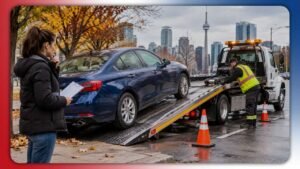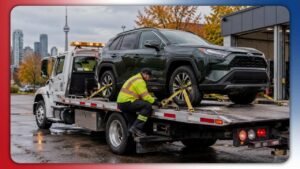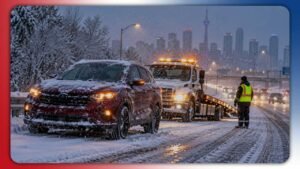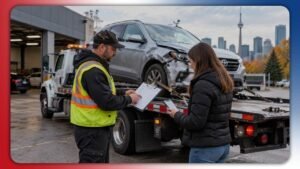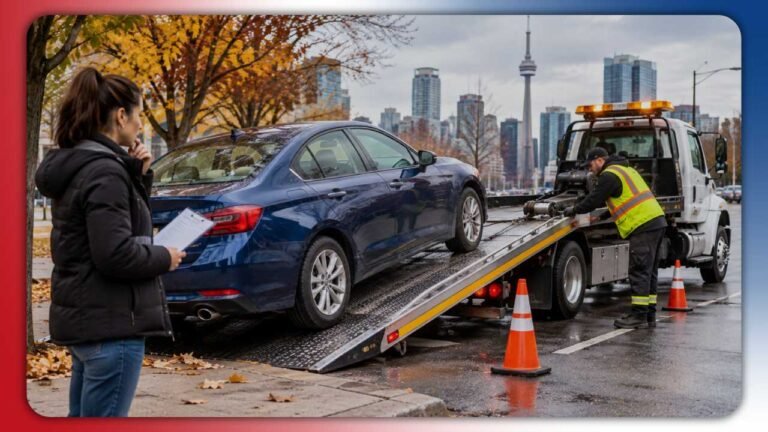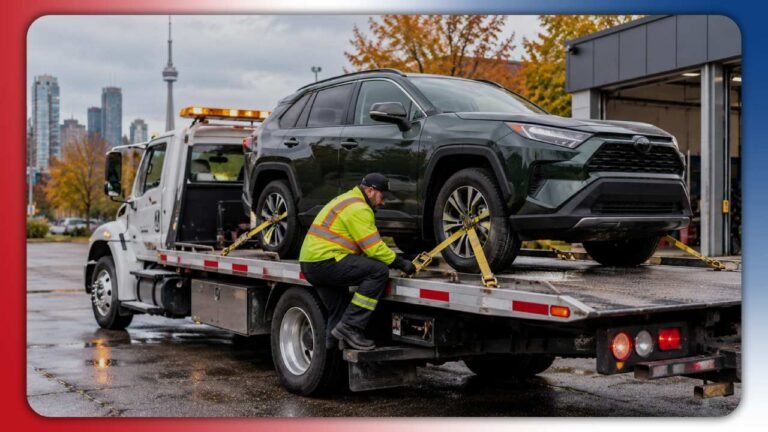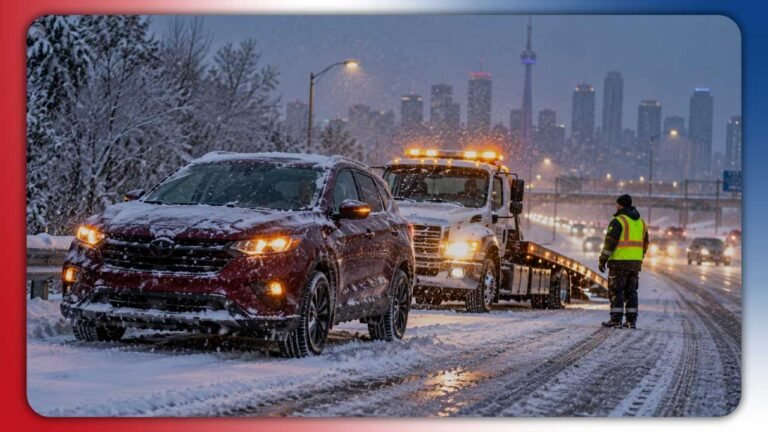

Towing Scams in Ontario often involve unsolicited tow trucks, undisclosed fees, misleading consent forms, and unwanted storage-yard transfers. You can protect yourself by checking provincial certificates, reviewing published rates, and choosing the destination before authorizing a tow.
Ontario’s Towing and Storage Safety and Enforcement Act (TSSEA) sets requirements for operators and drivers. The Ministry of Transportation oversees certification and investigates qualifying complaints. These safeguards apply to common roadside towing arrangements, subject to legal exemptions. Your priority remains personal safety after any breakdown or collision.
Common Towing Scams in Ontario and Their Warning Signs
Most Towing Scams in Ontario begin when someone pressures you to accept a service before discussing the price. Look for 5 distinct warning signs: unsolicited arrival, false credentials, blank forms, unclear destinations, and unexplained extras.
Unsolicited Accident Chasers
An accident chaser approaches your vehicle after a crash without a request from you or another authorized dispatcher. The driver might claim police or an insurer sent the truck. Ask dispatch to confirm the actual assignment before speaking about payment. Keep your doors locked when an unknown operator acts aggressively.
False Company Names and Credentials
A deceptive operator might use another business’s name, a misleading online listing, or a disconnected telephone number. Compare the tow truck’s displayed company name and certificate number with official records. Ask the driver to show the tow driver certificate. Walk away from an ordinary voluntary arrangement when the identification fails verification.
Blank Agreements and Unwanted Destinations
A blank consent form gives you no reliable record of the agreed service or drop-off address. Read every field, photograph the completed document, and keep your copy. Decline pressure to choose an unfamiliar collision centre, repair shop, or storage yard without discussing the destination with your insurer.
Ontario Towing Laws and Driver Rights in 2026
Ontario law generally requires informed towing consent unless police or an authorized official directs the removal. You also have rights concerning destination choice, posted maximum charges, records, and access to belongings. Restricted highway zones create a separate dispatch exception.
Provincial Certificates and Company Identification
Tow operators and tow drivers must hold applicable provincial certificates. The truck must display the company’s identity and certificate details. Verify the operator through Ontario’s published towing rate and certificate portal. A commercial vehicle registration alone does not replace the required towing credentials.
Consent to Tow and Destination Control
You normally choose both your towing provider and destination. The driver must provide the required rights information and maximum rates before seeking your consent. Police-directed removals and restricted towing zones can change your options. Never authorize repairs by signing a document intended only for towing.
For a deeper distinction between voluntary service and authorized removal, review the Ontario consent towing rules before signing any form. Provincial exceptions depend on the circumstances, not a driver’s verbal claim.
Itemized Invoices and Payment Methods
Request the itemized invoice before payment and collect a receipt after payment. Ontario permits cash, debit, and credit card payments. Operators cannot charge beyond their published maximum schedule for listed services. The province also prohibits fuel surcharges under its towing requirements.
Common Online Booking and Impersonation Frauds
Towing Scams in Ontario can also start through misleading search results and imitation company profiles. Verify the business before sharing card information. Fake listings sometimes route customers through an intermediary that hides the actual provider and price.
Suspicious Search Results and Phone Numbers
Compare the company’s listed name, telephone number, and service location across its website and Ontario registration. Search the operator’s certificate information independently. An unusually urgent payment request or an inconsistent company name warrants further review. Do not send card photographs or insurance documents through unfamiliar messaging accounts.
Prepayment and Dispatch Confirmation
Ask for a service description and written total before authorizing a deposit. Confirm whether payment goes directly to the named provider. Provincial police reported a Bancroft towing impersonation concern in January 2025. The report described callers who prepaid substantial sums to a contact impersonating a former business. Such reports illustrate why independent number verification matters.
How to Verify a Tow Truck Before You Agree
To verify a tow truck, check 4 details: the company name, operator certificate, driver certificate, and published maximum rates. Compare the same company information across the truck, consent document, invoice, and official provincial portal.
Match the Driver and Operator Certificates
Read the certificate number displayed on the truck. Ask the driver for the tow driver certificate and note the business name. Search Ontario’s official operator database rather than trusting a social media profile. Photograph the identifying information only when you can do so safely.
Confirm Dispatch and Service Area
Call the company using a separately verified telephone number. Ask the dispatcher for the truck description, driver’s name, and destination address. If your insurer arranged the tow, confirm the dispatch directly with the insurer. A vehicle arriving first does not automatically have your authorization.
Check the Maximum Rate Schedule
Ask for the operator’s written maximum rate schedule before consenting. Confirm the basic tow category and applicable distance or additional services. Your final charge cannot exceed the relevant published maximum. A posted maximum is a ceiling, not a universal provincewide towing price.
Inflated Towing Charges and Storage Yard Traps
Towing Scams in Ontario sometimes appear only after the driver presents an unexpected bill or changes the agreed destination. Compare every charge with the operator’s published schedule and your signed consent. Flag unauthorized additions rather than assuming every high invoice proves fraud.
Unexpected Labour and Cleanup Fees
Inspect line items for towing, labour, cleanup, stand-by time, and distance. Ask which services actually occurred and which published rate applies. Ontario’s 2026 rate regulation distinguishes basic, intermediate, and advanced towing. Recovery equipment, a rollover, or multiple trucks can change the appropriate service category.
Unapproved Storage Yard Transfers
Confirm the full drop-off address before loading your vehicle. Contact your insurer when a driver proposes a different repair facility or storage compound. Record the destination in the consent document. Ask the storage operator about access arrangements, release procedures, and any applicable charges.
Comparing Real Charges Without Inventing Rates
A reported Aurora case in August 2026 described a disputed $2,683.75 invoice for a 1.7 km (1.1 mile) tow. The published report presented the driver’s allegations and the operator’s refusal to comment. The example does not establish a typical GTA price or a legal finding of fraud.
Your final quote depends on the operator’s published maximum schedule and actual service category. GTA Towing & Scrap Cars does not publish a verified universal scam-related towing fee. Request a current written quotation rather than relying on a competitor’s isolated invoice.
Towing Scams in Ontario After a Collision
Towing Scams in Ontario become harder to recognize when a collision causes confusion, injuries, and traffic delays. Protect your safety first, then contact police or emergency responders when necessary. Call your insurer before choosing an unfamiliar repair destination.
Roadside Safety Before Negotiation
Call 911 when a collision creates immediate danger, injuries, or blocked traffic lanes. Move to safety only when traffic and your vehicle’s condition permit. Avoid standing between vehicles or beside active highway lanes. Follow the responding officer’s direction without negotiating with competing tow trucks.
Insurance Coverage and Repair Referrals
Ask your insurer to confirm which towing charges the policy covers. Do not accept a claim that insurance guarantees every requested service. Ask whether the proposed repair facility belongs to your insurer’s preferred network. Keep towing authorization separate from any collision repair authorization.
For further details about claims and towing payment, read the accident towing insurance guide before approving a repair-shop referral. Ask the claims representative to document any agreed destination or payment arrangement.
Restricted Highway Towing Zones
Ontario maintains restricted towing zones on designated Greater Toronto Area highways. Only authorized service providers can perform designated towing work inside those zones. Call 511 for the applicable restricted-zone roadside response, unless an emergency requires 911. Confirm the current zone rules before arranging an independent truck.
How to Compare Towing Rates Without Getting Misled
To compare towing rates, request written estimates from legitimate providers and match the services in each quote. Check basic-tow charges, distance rates, applicable extras, and taxes. Do not use the cheapest advertised figure without confirming what the figure covers.
Identify the Service Category
A standard vehicle move differs from accident recovery or an overturned commercial truck. Explain your vehicle’s position, condition, location, and intended destination. Ask whether basic, intermediate, or advanced towing applies under the provincial rate categories. Require explanations for any specialized equipment charges.
Separate Maximum Rates From Market Prices
Ontario’s public portal shows each operator’s maximum rates, not a single government price for every vehicle. Operators can charge less than their listed maximum. Compare 2 written quotations when you have enough time and a safe location. Never treat a maximum rate as a mandatory minimum.
Review the Final Invoice
Compare the invoice against your signed consent, the rate schedule, and the services actually completed. Check the towing address and destination, distance, time, and tax. Request corrected paperwork when a line item conflicts with the agreed work. Keep records for the insurer and provincial complaint process.
Steps to Take When a Vehicle Reaches an Unwanted Storage Yard
Act quickly when a towing company brings your vehicle to an unapproved storage location. Confirm the storage address and ask for the paperwork. Contact your insurer and request an itemized bill before agreeing to additional repairs or transfers.
Obtain Vehicle and Property Access
Ask the storage operator how to retrieve personal belongings and inspect the vehicle. Ontario’s towing guidance protects reasonable access to personal property. Follow documented access procedures and request a supervisor if staff refuse access without explanation. Police restrictions can limit access in specific investigations.
Preserve Payment and Transport Records
Save the consent form, card receipt, invoice, messages, and photographs. Record the vehicle identification number (VIN), storage address, and staff member’s name. Write down each disputed charge and the reason for disagreement. Avoid signing a broad repair authorization to secure a release.
Coordinate the Vehicle’s Release
Tell your insurer about the disputed storage arrangement. Ask for approved recovery or transport options and clarify who bears further charges. Obtain written release conditions from the yard. Escalate suspected threats or criminal conduct to police rather than arguing at the storage gate.
Distinguishing Unfair Charges From Proven Fraud
Not every expensive tow represents fraud. Identify the exact service performed and compare the invoice with the company’s authorized rates. An accident recovery that needs additional equipment differs from a simple parking-lot pickup.
Basic and Advanced Recovery Differences
A standard tow normally moves a vehicle from an accessible roadside position. Advanced recovery can involve a rollover or a vehicle outside a normal driving surface. The provincial regulation identifies these service categories. Ask why a winch, extra truck, or specialized recovery charge appears on your invoice.
Evidence Before Making a Public Allegation
Keep neutral records before publicly describing a business as fraudulent. Photograph the consent form, review the published rate schedule, and record the services performed. Ask the operator for an explanation in writing. Submit suspected regulatory violations to the province and suspected crimes to police. A regulator or court determines whether a specific allegation has legal merit.
Reporting a Suspicious Tow Operator in Ontario
Report suspected regulatory violations to Ontario’s Ministry of Transportation and suspected criminal conduct to police. Document events promptly with dates, photographs, receipts, and certificate details. A billing disagreement and an allegation of criminal fraud require different reviews.
Provincial Towing Complaints
Ontario accepts complaints involving towing or storage events from January 1, 2024 onward under provincial oversight. Use the official Ministry of Transportation towing complaint process. Include the company’s name, certificate number, vehicle details, and signed paperwork. Explain the specific disputed action clearly.
Police and Insurance Fraud Reports
Contact local police when you face threats, extortion, theft, or suspected criminal fraud. Tell your insurer when the disputed charge connects to a collision claim. The Insurance Bureau of Canada also accepts insurance-crime information. Keep copies of every submission and response.
Billing Disputes and Supporting Evidence
Ask the towing company for a written review of the invoice. Compare the claimed services against the provincial schedule and actual work. Preserve your bank or card statement as proof of payment. Seek independent legal advice for substantial disputes involving a repair or storage lien.
The 2026 Ontario Towing Complaint Evidence File
Create an organized evidence file whenever a dispute concerns authorization, unexpected charges, or vehicle storage. Towing Scams in Ontario investigations benefit from precise records, rather than broad descriptions of poor customer service. You can organize the file in under 1 folder on your phone.
Record the Timeline and Location
Note the exact time of the collision or breakdown, tow truck arrival, loading, and drop-off. Save your phone’s location pin and the repair facility’s address. Document who requested the tow and who approved the destination. Compare the timeline with the company’s invoice and your insurer’s call history.
Organize Signed Documents and Receipts
Keep the full consent document, maximum rate schedule, vehicle photographs, and original payment receipt. Save screenshots of any online quotation or driver messages. Record the operator’s provincial certificate number. Explain differences between agreed work and billed work in 1 concise complaint summary.
Everyday Prevention Before Your Next Breakdown
Avoid Towing Scams in Ontario by saving a verified towing contact before an emergency happens. Confirm the company’s licensing details and service area. Keep your insurer’s claims telephone number, roadside membership details, and preferred repair destination available offline.
Keep a Prepared Roadside Contact List
Save 3 contacts: your insurer, your roadside assistance provider, and a verified local tow operator. Record the policy number and vehicle identification details securely. Confirm which provider serves Toronto, Mississauga, Brampton, or your regular travel route. Update contact details when your coverage changes.
Save a Basic Roadside Checklist
Keep a phone charger, reflective safety vest, flashlight, and printed emergency numbers in your vehicle. Store your chosen repair shop’s address in your phone. For winter driving, add warm clothing and a blanket. Avoid carrying sensitive insurance documents openly on the dashboard.
Recognize Legitimate Professional Practices
A legitimate operator identifies the company, explains the work, discusses the destination, and presents applicable rates before consent. A respectful driver allows time to read the required documents. Company certification is verifiable through the province. You should receive an itemized receipt after payment.
Quick Reference: Towing Scam Prevention Tasks
Use the 8 checks below to keep a clear record before, during, and after a voluntary tow. Timings describe when to act, not a guaranteed dispatch schedule.
| Task | Timing | Method | Difficulty |
| Verify tow credentials | Before consent | Ontario certificate portal | Easy |
| Confirm dispatch | Before loading | Call verified dispatcher | Easy |
| Review maximum rates | Before consent | Written rate schedule | Medium |
| Check destination | Before loading | Consent form and map | Easy |
| Photograph the truck | At roadside | Camera and certificate number | Easy |
| Keep the invoice | Before payment | Itemized invoice and receipt | Easy |
| Contact insurer | After collision | Official claims telephone | Easy |
| Report suspected abuse | After safe recovery | Ontario complaint portal | Medium |
Frequently Asked Questions About Towing Scams in Ontario
Can I refuse a tow truck that arrives without my request?
Yes. You can normally refuse an unsolicited voluntary tow. Police-directed removal and restricted towing zones create exceptions.
Must a tow truck driver show a provincial certificate?
Yes. Ontario requires applicable certificates, and drivers must show their tow driver certificate on request.
Can a towing company add a fuel surcharge in Ontario?
No. Provincial towing rules prohibit fuel surcharges. Compare any other charge with the operator’s published schedule.
Can I choose where my vehicle goes after a crash?
Yes, generally. You choose the destination for an ordinary consent tow. Authorized police directions and restricted-zone rules change certain arrangements.
Should I pay before receiving an itemized invoice?
No. Request an itemized invoice before payment. Keep your receipt and written towing agreement for later review.
Choose Documented, Transparent Towing Assistance
Towing Scams in Ontario are easier to avoid when you verify credentials, agree on the destination, and review charges upfront. Keep your consent paperwork and insurance information together. Review the Ontario driver towing rights and contact GTA Towing & Scrap Cars for a service-specific quote. Ask the team to confirm availability, the exact destination, and applicable charges before authorizing work.