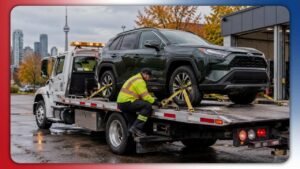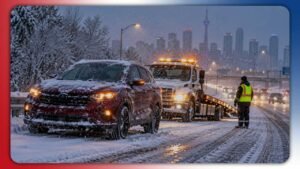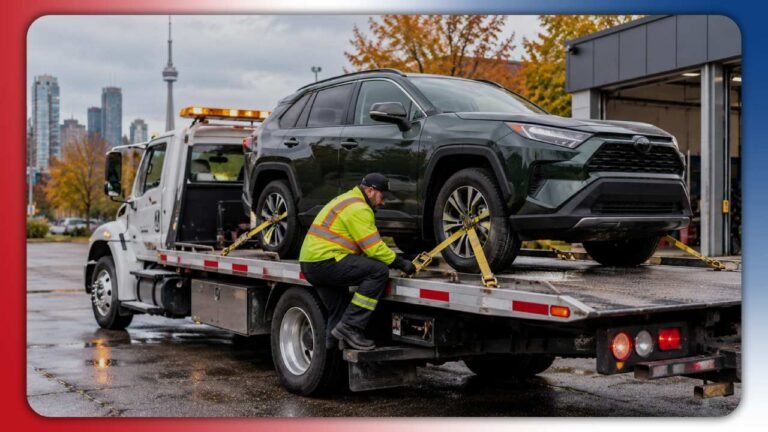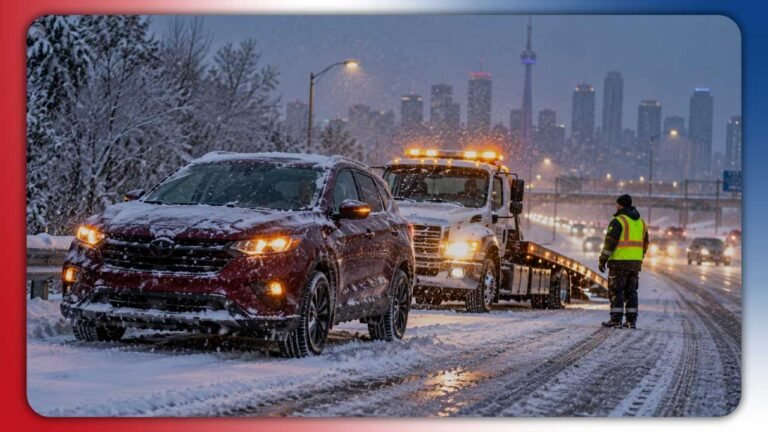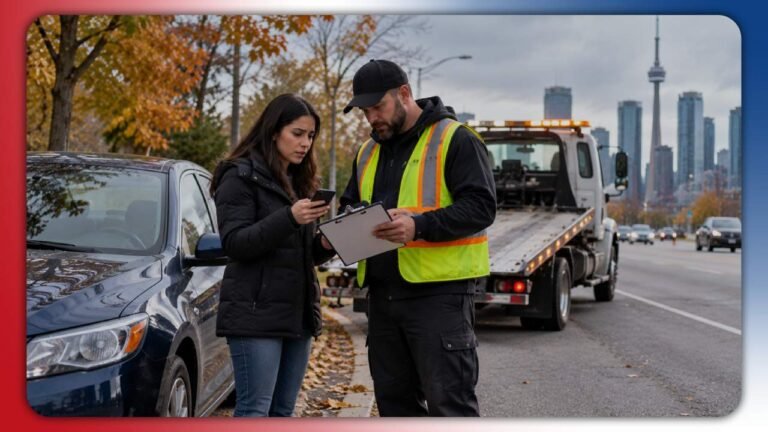

When your car gets towed, an operator moves the vehicle to another location, often a police-authorized pound or storage yard. You must locate the vehicle, confirm release requirements, review charges, and arrange collection or onward transport.
If you discover an empty parking space in Toronto, your vehicle might have been relocated rather than impounded. Start with Toronto Police Service before assuming theft. Your plate number and last parking location help dispatchers search the towing record.
What Happens When Your Car Gets Towed in Toronto
The next steps depend on who ordered the tow. Police-authorized removal, voluntary recovery, and private-property towing follow different procedures. You should establish the reason before paying any business or arranging a second truck.
For a police impound, an authorized operator takes the car to the designated compound. An ordinary relocation might move your vehicle to another nearby street. A voluntary tow normally goes to the destination you selected in the consent paperwork.
The Toronto Police Service identifies 416-808-2222 as its non-emergency contact for missing towed vehicles. Have your licence plate and last known location available. A dispatcher can identify a recorded impound or relocation and explain the current location.
Police-authorized removal and relocation
Police-directed towing does not always require your personal consent. Enforcement officers can arrange removal for parking violations, traffic hazards, collision recovery, or lawful seizure. The specific legal reason governs the vehicle release process.
Toronto also moves vehicles during traffic restrictions and other enforcement activity. Do not drive to the first impound yard you find online. Confirm the exact location and release procedure with the relevant authority.
Voluntary towing after a breakdown
A voluntary towing job normally requires your authorization before the operator moves the vehicle. Ontario law gives drivers important rights over the provider, destination, rates, and paperwork. Restricted highway tow zones create an important exception.
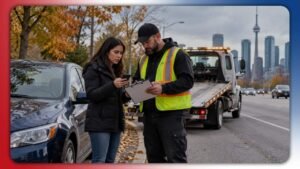
Ask the operator for the company identity, published maximum rates, destination, and written consent details. Keep a copy of the invoice and photographs. A written record helps when your insurer later reviews the charge.
Reasons Ontario Authorities Remove Vehicles
Common removal reasons include illegal parking, collisions, unsafe stopping, and police seizure. You must identify the reason because a parking tow differs from a criminal investigation hold.
Toronto parking enforcement targets rush-hour restrictions, blocked access, and other bylaw violations. Police can also remove abandoned vehicles or vehicles involved in investigations. An authorized official decides the handling process for those cases.
A car left on private property without permission faces different enforcement rules. Property managers cannot automatically apply every public-street procedure. Ask who authorized removal and request the relevant documentation.
Parking tickets and impoundment
A parking violation can trigger towing as well as a separate penalty. The violation itself does not determine your storage bill. Verify any outstanding parking matter through the issuing authority, not the tow truck driver.
The City of Toronto also operates an habitual-offender program involving qualifying unpaid parking violations. That program has specific eligibility rules. Check the official notice rather than assuming every unpaid ticket leads to a tow.
Collision and enforcement holds
Police can retain control of a vehicle following certain collisions or traffic offences. An impound hold means the operator cannot release the car solely because you offer payment.
Ask the police about the release date, registered-owner requirements, and any required authorization form. Keep police and insurer documents together. A damaged vehicle also needs safe transport after the hold ends.
Where a Towed Car Goes After Removal
A towed car travels to the destination directed by the authorized party or selected through valid consent. That destination can be a police compound, collision centre, repair shop, or storage facility.
For voluntary towing, Ontario generally allows you to select the destination. Police-directed impounds and restricted highway zones can limit that choice. Do not assume the storage yard doubles as a repair facility.
Record the destination address before the truck departs. Ask the operator for the company name and certificate number. Request a written record if your vehicle needs a second tow to a mechanic.
Storage yard notification
Vehicle storage operators must take steps to notify the owner about the car and collection process. Ontario guidance describes location details, contact information, and retrieval instructions as important parts of that notice.
Do not rely exclusively on a postal letter. Call promptly once you identify the tow. Storage charges can continue while you wait for paperwork or arrange transportation.
Repair shop delivery after an accident
A repair shop accepts the vehicle for inspection or repair only under its own intake rules. Confirm shop availability before choosing the destination. A collision reporting step might also apply depending on the incident.
Your insurer might recommend an approved facility, but you should confirm policy conditions directly. GTA Towing & Scrap Cars describes transport to collision centres and inspection facilities within its published service details.
How to Find Your Towed Car in the GTA
To find your towed car, contact the police or parking authority responsible for the original location first. Provide your plate number, vehicle description, and exact parking location. Request the operator and compound address before travelling.
In Toronto, start with the Toronto Police Service non-emergency number. In Mississauga or Brampton, ask Peel Regional Police about a police seizure. Halton drivers should follow Halton Regional Police vehicle-release guidance.
Record the dispatcher name, call time, and any tow reference. Ask whether the vehicle has an active police hold. Verify that the yard address matches the official record before sharing payment details.
Information to prepare for the lookup
Prepare 4 details: plate number, vehicle make, location, and approximate tow time. Add the vehicle identification number if the dispatcher requests extra confirmation.
A street name alone can create confusion near plazas or multi-level parking garages. Provide the closest intersection, parking level, or marked bay. Keep a photograph of the last parking spot when available.
Missing vehicle versus confirmed theft
A missing vehicle is not automatically a stolen vehicle. Confirm towing records and nearby relocation activity first. Contact police again if the official search reveals no authorized tow.
Avoid giving vehicle or financial details to callers claiming they hold your car without proof. Independently verify the tow company using the official authority or its published number.
Release Documents and Ownership Checks
Most impound pickups require proof of identity, ownership, and any mandatory police release authorization. Exact document requirements differ by police service and by the reason for seizure.
Bring government-issued identification and your registration or ownership documents. Ask about keys, insurance confirmation, and payment methods before leaving home. The registered owner should arrange collection when police require owner attendance.
Peel Regional Police describes a process involving a police division, an owner release form, and an authorized towing compound. Halton Regional Police also identifies release slips for designated vehicle pickups.
Registered owner and delegated pickup
A friend cannot always collect a police-impounded vehicle without authorization. Confirm whether the facility accepts a representative and which signed documents it requires. Police restrictions can override ordinary pickup arrangements.
Bring an appropriate trailer or tow truck if the car cannot legally or safely drive away. An expired licence, damaged wheel, or unsafe tire needs a transport plan rather than another trip.
Towing Charges and Storage Fees in Ontario
The final cost depends on the towing category, authorized rates, storage time, and legitimate recovery work. Do not accept an unitemized total. Ask the operator to separate towing, storage, and any additional services.
Ontario requires regulated operators to publish their maximum rates and provide required rate information. A company cannot exceed its own published maximum rates. Check the Ministry of Transportation rate portal when a disputed amount appears.
Toronto Police Service publishes contract towing and storage tables for designated police operators. Those figures are not automatic prices for private towing jobs. The operator invoice and applicable authority establish the actual charge.
Storage time and accumulating fees
Toronto Police Service counts storage in 24-hour periods from vehicle arrival. Its published rules prorate the first day by hour. Later 24-hour periods trigger full-day charges when the new period begins.
Ask the yard to state its cutoff and release hours. Request a written balance before travelling. Arrange pickup quickly because another storage period can increase your bill.
Itemized billing and payment records
You have a right to an itemized invoice before paying for regulated towing services. Keep the invoice, payment receipt, rate schedule, and release confirmation for your records.
Check for unexplained recovery work, extra mileage, and unauthorized storage charges. Ontario prohibits fuel surcharges for regulated towing. Discuss any questionable line with the provider before opening a provincial complaint.
Your Rights During Voluntary Towing
Ontario generally requires consent before a tow that you request or authorize. Drivers also have rights concerning destination choice, published rates, identification, and access to personal belongings.
The provincial system operates under the Towing and Storage Safety and Enforcement Act. Tow operators must hold appropriate certificates unless an exemption applies. Ask the driver to show identification before signing.
Do not sign a blank consent form. Review the business name, driver certificate number, destination, and agreed work. Keep the signed copy. Police-directed removals and specific regulated exceptions operate differently.
Vehicle access and belongings
Owners generally can access their stored vehicles to recover personal property during regular access hours. Police holds or other lawful restrictions can alter that permission. Confirm entry details with the facility.
Remove medication, documents, wallets, and child seats when the operator permits safe access. Photograph items you leave behind. Never enter a hazardous crash scene merely to collect personal possessions.
Disputing an unauthorized tow
Document the tow before disputing payment or damage. Save photographs, consent papers, the invoice, and messages from the operator. Report a provincial towing complaint to Ontario’s Ministry of Transportation.
Describe dates, locations, and charges in chronological order. Separate a disputed parking ticket from a towing-business complaint. Police, municipal parking authorities, and provincial regulators handle different issues.
What Happens When Your Car Gets Towed After an Accident
A collision tow can involve police, a reporting centre, your insurer, and a repair facility. Each organization has a separate job. You should confirm insurance coverage before treating any tow as free.
Call 911 for injuries or immediate danger. Follow police instructions at the scene. For a non-emergency collision, verify the applicable reporting requirements and safe transport destination.
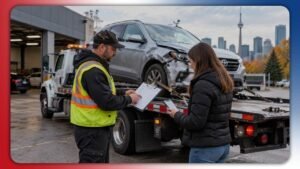
GTA Towing & Scrap Cars explains its accident recovery and collision-centre transport on its accident vehicle towing services. Confirm dispatch details and destination before authorizing the job.
Policy coverage and reimbursement
Insurance payment depends on your policy and the incident. A tow truck driver cannot guarantee an insurer will cover every storage charge. Ask your adjuster about limits, approved destinations, and reimbursement paperwork.
Save the tow receipt, collision report number, claim number, and repair-shop estimate. Forward documents promptly. Request confirmation before authorizing a second tow or extended storage.
Restricted Highway Towing and Private Parking
Ontario restricts towing in designated provincial highway zones to authorized operators. Call 511 for towing only inside a restricted provincial highway tow zone. Call 911 when your vehicle occupies a live lane or creates immediate danger.
Outside those zones, contact an appropriate towing provider directly for non-emergencies. Check the Ontario 511 zone map before requesting a regular operator. A highway shoulder is not a safe place to negotiate paperwork.
Private parking removal follows its own authorization requirements. Ask whether a property owner, parking authority, or police service ordered the tow. Keep any parking notices or photographs showing posted restrictions.
Highway pickup safety
Stay away from moving traffic and follow emergency personnel instructions. Give dispatch your route, direction, nearest exit, and visible marker. Do not stand behind your disabled car on a busy highway.
Only approved operators can clear restricted tow zones. Once outside the restricted area, destination choice follows the applicable rules and police directions. Keep your personal safety ahead of vehicle collection.
How to Recover Your Car Without Delays
To recover your car without delays, verify the location, confirm release eligibility, collect documents, then arrange payment and transport. These 4 actions prevent many wasted trips to storage yards.
Call the yard and request business hours, your current balance, and the accepted identification. Confirm any police hold separately. Arrange a licensed driver or a second truck before completing the release.
For an undriveable or insurance-related vehicle, discuss insurance vehicle transport options with dispatch. Ask about a safe pickup, destination, and any supporting insurer documents.
Condition check before driving home
Inspect the car before leaving the compound. Photograph any new dents, broken windows, flat tires, and warning lights. Compare the condition against photographs from before towing when available.
Check whether the car starts, steers, and brakes normally. Do not drive a vehicle with unsafe suspension, leaking fluids, or damaged tires. Request appropriate transport instead.
Receipt and final document review
Collect 3 records before departure: the invoice, receipt, and release confirmation. Match charges against the stated rates. Record any unresolved concerns while details remain fresh.
Ask the compound about remaining personal items and key handover. Keep copies of written correspondence. Your records can support insurer claims or a later regulator complaint.
Quick-Reference Recovery Checklist
Use this checklist from discovery through collection. Timings describe when to act, not guaranteed waiting periods.
| Task | Timing | Method | Difficulty |
| Locate your car | Immediately | Police lookup with plate | Easy |
| Confirm authorization | Before collection | Ask police and yard | Moderate |
| Check storage balance | Same day | Request itemized total | Easy |
| Prepare release documents | Before visiting | Identification and release slip | Moderate |
| Inspect vehicle | At collection | Photos and safety checks | Easy |
| Arrange second transport | Before departure | Approved tow or driver | Moderate |
Frequently Asked Questions
Can police tow my car without my permission in Ontario?
Yes. Police or authorized officials can order towing under applicable legal powers without obtaining ordinary voluntary-tow consent.
Can I find a towed car using its licence plate?
Yes. Toronto Police Service asks for the licence plate and last known location when checking recorded impounds and relocations.
Do I have to pay storage fees before collecting my car?
Usually, yes. Storage operators generally have lien rights, subject to applicable rules and disputes. Ask for an itemized invoice.
Will insurance pay for my tow and impound fees?
Not automatically. Your policy, claim facts, and authorization govern reimbursement. Confirm coverage with your insurer.
Can I recover belongings before paying the whole tow bill?
Generally, yes. Ontario provides access rights during regular facility hours, subject to police instructions and lawful restrictions.
Get Help With an Authorized GTA Tow
Locate the vehicle and confirm your release rights before ordering transport. For a new breakdown or an approved second move, contact our towing team. Share your pickup location, car condition, and destination to request an accurate quote.