Your catalytic converter junk price in Toronto and the GTA ranges from $50 to $1,600 in 2026. The exact catalytic converter scrap cost depends on your vehicle’s make and model, and whether the unit is an original equipment manufacturer (OEM) or aftermarket.
Three precious metals set that price: platinum, palladium, and rhodium. Rhodium alone can add hundreds of dollars to a single converter. This guide breaks down real numbers for Toronto and the GTA by vehicle type. It also shows you how to identify your converter and explains Ontario’s legal steps.
You do not need to guess at a number or trust an outdated blog post. Local scrap buyers reprice converters weekly as platinum, palladium, and rhodium markets move, so an accurate quote takes minutes, not days.
What Is the Catalytic Converter Junk Price in Toronto Right Now?
Toronto and GTA scrap buyers pay $50 to $1,600 for a used catalytic converter in 2026. Small aftermarket units sit near the bottom of that range. OEM converters from Toyota, Honda, and hybrid models sit near the top.
Local recyclers report an average gas converter price near $75 at the door. Diesel converters from 2008 and later Dodge, Ford, and GM trucks often bring $80 to $600. Newer diesel units contain more catalytic metal to meet stricter emissions standards.
Metal markets shift the number daily. Ask a reputed buyer for a current quote instead of relying on a price you saw last year.
The GTA converter market also follows a seasonal pattern. Summer months bring the lowest offers because fewer vehicles change hands. Fall brings a modest increase as drivers prepare their vehicles for winter and repair shops replace failing units. Sell in early fall if timing is flexible, since demand and price both climb before the cold season arrives.
How Precious Metal Prices Affect Your Converter’s Value in 2026
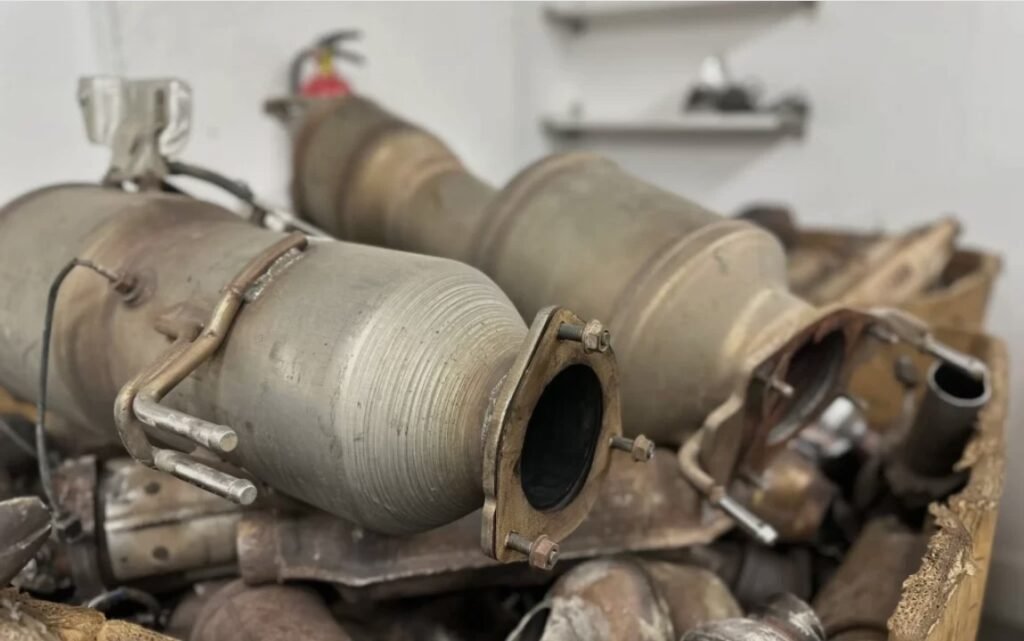
Platinum, palladium, and rhodium trade daily on global commodity markets. Your converter’s price rises and falls with them. Rhodium contributes the smallest quantity inside a converter but the largest share of its value. Rhodium trades at several times the price of platinum per gram.
Three vehicle categories carry the richest metal loads: hybrid vehicles, luxury imports, and post-2008 diesel trucks. Manufacturers added more rhodium and palladium to these systems to meet tighter emissions standards. That extra metal is why their scrap converters outvalue standard gas models by a wide margin.
A buyer who quotes a fixed price without checking current metal rates is likely underpaying you. Confirm that your buyer references live market data before you accept an offer.
Auto sales and repair-shop volume across the GTA can also influence local demand. When the regional economy strengthens, more vehicles change hands. More converters enter the scrap stream, which can soften prices slightly during peak trade-in months.
Why Does a Catalytic Converter Have Scrap Value?
A catalytic converter earns its value from the metals coated onto its ceramic core, not from its size or steel shell. Platinum, palladium, and rhodium convert harmful exhaust gases into less harmful emissions, and recyclers recover these metals for resale.
Rhodium trades at several times the price of gold per gram, which is why a small converter can outvalue an entire junk car’s steel body. Three material types hold these metals: a ceramic honeycomb, a stainless steel foil, and a bead substrate. Ceramic honeycomb is the most common design in passenger vehicles.
Catalytic converters have been standard equipment on gasoline vehicles since the early 1980s and on diesel vehicles since the early 1990s. Vehicles built before 2008 typically carry diesel converters with far less recoverable metal. The 2008 emissions rules pushed manufacturers to add far more platinum, palladium, and rhodium to diesel systems.
What Determines Your Catalytic Converter Scrap Cost?
Four factors set your catalytic converter scrap cost: OEM status, vehicle make and model, physical condition, and current metal prices.
OEM vs Aftermarket Catalytic Converters
An OEM catalytic converter is the original unit installed by the vehicle manufacturer. An aftermarket catalytic converter replaces that original part and typically contains less precious metal.
OEM units usually sell for $300 to $800 in the GTA. Aftermarket replacements usually sell for $100 to $300. Scrap yards check part numbers and visual markings to confirm which type you have.
Vehicle Make and Model
Your vehicle’s year, make, and model set the converter’s metal content. Full-size trucks such as the Ford F-150, Dodge Ram, and Chevrolet Silverado carry larger converters with more recoverable metal. Compact cars such as the Honda Civic and Toyota Corolla carry smaller units with less material.
Some vehicles use two or three converters in a single exhaust system, including many V6 and V8 trucks and SUVs. Multiple converters raise your total payout, so tell your buyer if your vehicle has more than one unit.
Condition and Precious Metal Content
A clean, intact converter earns a higher price than a damaged or gutted one. Rust, cracks, and missing core material reduce the amount of recoverable metal. Ask your buyer to inspect the unit in person to get an accurate number rather than a phone estimate.
A high-flow catalytic converter, common on modified and performance vehicles, does not automatically outvalue a factory unit. Original equipment converters usually carry more precious metal than performance replacements. The performance part often costs more when new, but it scraps for less.
Catalytic Converter Junk Price by Vehicle Type in Toronto (2026)
Use this table as a starting point, then confirm your exact catalytic converter junk price with a local buyer.
| Vehicle Type | Estimated Scrap Value (CAD) |
| Small compact car (Honda Civic, Toyota Corolla, Hyundai Elantra) | $50 – $200 |
| Midsize sedan (Toyota Camry, Honda Accord, Ford Fusion) | $150 – $400 |
| Compact SUV (Honda CR-V, Toyota RAV4, Ford Escape) | $150 – $450 |
| Full-size pickup truck (Ford F-150, Ram 1500, Silverado) | $200 – $700 |
| Diesel truck, 2008 and newer (Cummins, Powerstroke, Duramax) | $80 – $600 |
| Hybrid vehicle (Toyota Prius and similar models) | $300 – $1,600 |
| Luxury or performance vehicle | $500 – $1,500 |
| Aftermarket replacement (any vehicle) | $50 – $250 |
Hybrid vehicles top this list because their converters run cooler and cleaner, which preserves more of the original platinum, palladium, and rhodium coating.
These ranges assume a complete, unmodified converter in average condition. A missing or stolen converter adds nothing to a scrap offer. It can also lower your total payout by $80 to $150, since the buyer must price the vehicle without that part.
How to Find Your Catalytic Converter Serial Number
To find your catalytic converter serial number, locate the stamped code near the oxygen (O2) sensor port on the converter housing.
Clean the surface with a mild solvent if dirt or rust hides the numbers. Light steel wool removes surface rust without damaging the stamp underneath. Once you read the full code, a buyer can match it to a database. That match produces your exact catalytic converter scrap cost, not a general estimate.
Three details typically appear in the stamp: a manufacturer code, a part number, and a production batch code. Photograph the full stamp before you call a buyer. A clear photo speeds up identification and often produces a firmer quote over the phone.
How to Sell a Catalytic Converter Legally in Toronto
Yes, you can sell a catalytic converter legally in Toronto. Ontario and the City of Toronto both regulate the transaction to reduce theft and trafficking.
Ontario Scrap Metal Reporting Rules
Ontario requires scrap metal dealers to record and report every catalytic converter transaction. Purchasers must collect your vehicle identification number (VIN) or proof of ownership before paying you. Purchasers must also pay through a traceable method rather than cash.
Required Documents
Bring three items to a legitimate buyer: your driver’s license, your vehicle registration or bill of sale, and the VIN connected to the converter. Buyers who skip this paperwork are not operating within Ontario’s rules.
The City of Toronto adds a further requirement for businesses that purchase unattached converters. Applicable buyers must keep records identifying the originating vehicle and seller. They must refuse a converter when required information is missing or when markings appear defaced.
Common Mistakes to Avoid When Selling a Catalytic Converter
Five mistakes cost GTA sellers real money every year:
- Trusting a static online price list instead of a current quote
- Removing or scratching out the stamped serial number
- Assuming every converter from the same model shares one fixed value
- Accepting an anonymous cash-only deal with no paperwork
- Dismantling a whole vehicle for one part before comparing that effort against selling the car intact
Avoid each of these mistakes, and you protect both your payout and your legal position as a seller.
How to Protect Your Catalytic Converter From Theft
Catalytic converter theft has surged across GTA neighborhoods such as Scarborough, North York, and Brampton. A thief can remove an unprotected converter in under 2 minutes using a battery-powered angle grinder.
Four steps reduce your risk:
- Park in a closed garage or a well-lit area overnight
- Install a bolt-on cat shield, which costs $200 to $400 installed
- Ask your local police service to etch your VIN onto the converter housing
- Confirm your comprehensive insurance policy covers catalytic converter theft
Toyota Prius, Honda CR-V, and full-size pickup trucks rank among the most targeted vehicles in the GTA because of their high ground clearance and metal-rich converters.
Should You Sell the Converter Alone or Scrap the Whole Car?
Sell the converter alone when your vehicle still runs and you only need repair funds. Scrap the whole car when the vehicle is non-running, heavily damaged, or near the end of its service life.
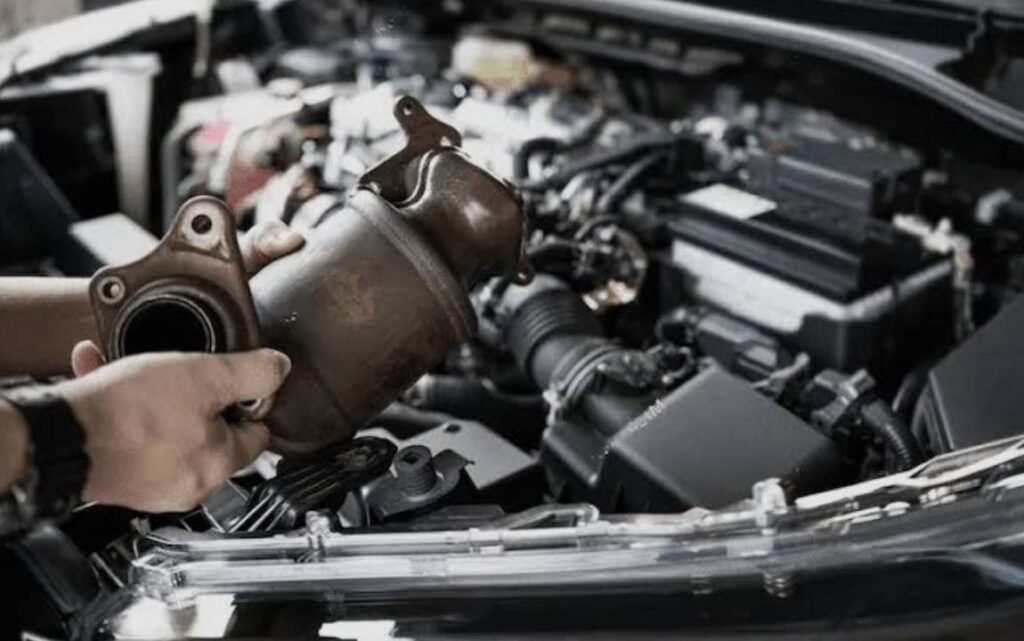
Selling a converter separately involves three extra steps: identifying the part, meeting Ontario’s documentation rules, and arranging safe removal. Your vehicle may already have two or three other failing systems. That extra effort rarely pays off compared to one simple, whole-vehicle transaction.
Removing a converter from a driveable car lowers that car’s resale value. It also creates a second transaction to manage. A non-running vehicle with an intact OEM converter, especially from a Toyota, Honda, or hybrid model, often brings more total cash through a scrap car removal GTA service than through a part-by-part sale.
Most GTA buyers include a free towing service citywide when you scrap the complete vehicle. That perk saves you removal tools and extra trips.
Quick-Reference Table: Selling Your Catalytic Converter in Toronto
| Task | Timing | Method | Difficulty |
| Locate serial number | 10 minutes | Clean housing near O2 sensor port, read stamp | Easy |
| Gather documents | Same day | Collect ID, registration, and VIN | Easy |
| Get a price quote | 15 minutes | Call or visit a reputed scrap buyer | Easy |
| Compare offers | 1 day | Request phone or online quotes from 3 local buyers | Moderate |
| Schedule pickup | 1-2 days | Book free towing or drive to the yard | Easy |
| Complete the sale | Same day | Sign a bill of sale and receive traceable payment | Easy |
Most sellers complete every task on this table within 2 days. Vehicles with clean paperwork, such as a clear title and no lienholder, often move even faster. Some close the same afternoon a quote is requested.
Keep a copy of your bill of sale and payment confirmation for at least 1 year after the sale. Ontario’s traceability rules protect you as a legitimate seller if a question comes up later.
Frequently Asked Questions
How much is a catalytic converter junk price in Toronto?
Between $50 and $1,600, depending on your vehicle’s make, model, and OEM or aftermarket status. Hybrid and full-size truck converters consistently land at the top of that range.
Is it legal to sell a catalytic converter in Toronto?
Yes. Ontario requires buyers to record your VIN or proof of ownership and pay through a traceable method. Keep your documents ready before you contact a buyer.
Do OEM catalytic converters always sell for more than aftermarket ones?
No. OEM converters usually pay more, but the specific metal content inside each unit sets the final catalytic converter scrap cost. Ask for an inspection rather than assuming a category price.
Can I find my catalytic converter’s value using the serial number?
Yes. The stamped serial number near the O2 sensor port lets a buyer match your converter to a database price. Photograph the stamp clearly before you call.
Should I remove the catalytic converter before scrapping my car?
No. Selling the entire vehicle through a scrap car service usually nets more cash than removing parts yourself and saves you the extra removal step.
Get Your Catalytic Converter Junk Price Today
Your catalytic converter junk price in Toronto depends on four factors: OEM status, vehicle model, condition, and today’s metal market. A hybrid or full-size truck converter can bring $300 to $1,600, while a small aftermarket unit brings closer to $100. Confirm the exact scrap cost for your catalytic converter with a reputable local buyer before you sell.
Bring your VIN, your registration, and a clear photo of the stamped serial number to speed up your quote. A prepared seller with documents in hand typically receives a firmer, faster offer than one who calls with no vehicle details ready. Request a free instant cash quote from GTA Towing and Scrap Cars and get paid the same day your vehicle or converter leaves your driveway.