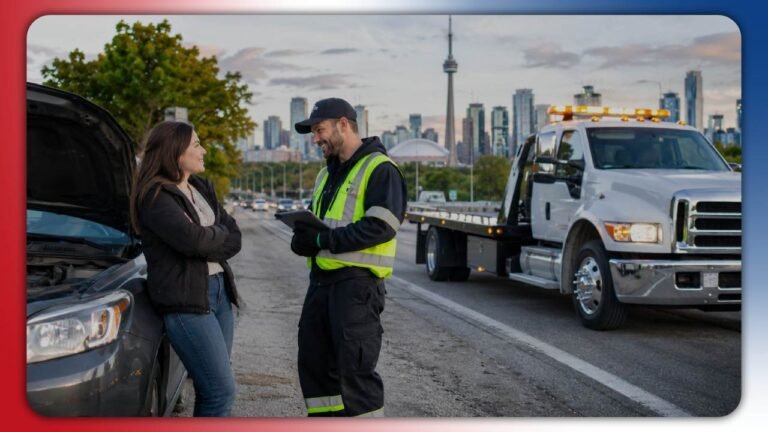

A Flat Tire on the Highway calls for roadside assistance when traffic, narrow shoulders, or darkness make repairs unsafe. Change the tire yourself only after reaching firm, level ground well away from moving vehicles.
A Flat Tire on the Highway can turn a routine drive through Toronto into a roadside emergency. GTA Towing & Scrap Cars offers tire changes and vehicle recovery across the Greater Toronto Area (GTA). The right service depends on your location, spare tire, and vehicle condition.
Safe Stopping After a Flat Tire on the Highway
Reduce speed gradually, hold your steering wheel firmly, and move away from active lanes. A Flat Tire on the Highway can create pulling, vibration, or a loud flapping sound. Avoid sharp steering corrections and sudden braking. Focus on reaching the nearest safe stopping area without losing vehicle control.
Steering Control During a Tire Blowout
Grip the wheel with both hands and ease off the accelerator. Activate your hazard lights when trouble starts. Brake gently as the vehicle slows. Steer toward a safe shoulder or nearby exit when conditions permit.
A sudden blowout affects handling differently from a slow leak. Stop before continued driving causes more wheel damage.
Shoulder Position and Passenger Safety
Choose a wide, level shoulder rather than a curve, bridge, or narrow ramp. Move your vehicle fully outside traffic lanes. Engage the parking brake after stopping.
Ontario’s driver’s handbook advises occupants to remain inside a disabled vehicle while awaiting help on a freeway. Keep seat belts fastened and doors locked when traffic creates danger. Exit from the traffic-free side only when leaving offers a clearly safer option. Never cross moving lanes to reach a median or service area.
When a Flat Tire on the Highway Requires a Tow
Request a tow when the vehicle cannot move safely or the damaged wheel prevents a roadside tire change. A Flat Tire on the Highway does not always require transport. However, a tire technician cannot solve every wheel, suspension, or brake problem with a spare.
Dangerous Locations and Limited Visibility
Call professional assistance when passing traffic leaves insufficient working space. The risk increases on the Don Valley Parkway, Highway 401, and Highway 400. Night driving, heavy rain, and freezing precipitation further reduce visibility and traction.
Do not position a jack beside an active lane. A Flat Tire on the Highway becomes more dangerous when the damaged tire faces traffic. Ask dispatch whether roadside work can occur safely. Police or highway responders can direct a safer recovery when necessary.
Wheel Damage and Missing Spare Tires
Choose vehicle transport when a bent rim, damaged suspension, or leaking brake line prevents safe movement. A shredded tire can also damage nearby components. Describe any collision, unusual wheel angle, or grinding sound before dispatch.
Many vehicles carry a temporary spare, but some carry only a compressor and sealant kit. Check your equipment before requesting a tire change. A Flat Tire on the Highway needs towing when no suitable replacement wheel is available.
Safe Conditions for Changing a Highway Flat Yourself
Consider a do-it-yourself change only in a parking area with firm ground and clear separation from traffic. A Flat Tire on the Highway should not push you into risky repairs on a shoulder.
Work Area and Weather Requirements
Find a level parking lot, service area, or other safe location outside highway traffic. Avoid soft gravel, steep grades, ice, and unstable pavement. A jack requires firm contact with the ground and the manufacturer’s specified lifting point.
Do not attempt repairs beside fast-moving vehicles. Avoid lifting a vehicle during severe wind or freezing rain. A Flat Tire on the Highway that leaves you on an exposed shoulder requires a different response: call for help.
Spare Tire and Tool Readiness
Confirm that your spare matches the vehicle’s requirements. Check the spare’s inflation pressure using the owner’s manual or tire label. Locate the wheel wrench, wheel-lock key, jack, and operating instructions. Carry wheel chocks when your vehicle manual recommends them.
A cracked, flat, or damaged spare cannot safely replace the punctured tire. Missing keys can stop a roadside change even when every other tool works.
How to Change a Flat Tire Away From Traffic
To change a flat tire away from traffic, secure the vehicle and follow its exact owner’s-manual procedure. Never perform these steps on a narrow highway shoulder. A Flat Tire on the Highway needs professional intervention when your stopping location remains exposed.
Vehicle Position and Wheel Preparation
- Park on firm, level ground beyond moving traffic.
- Engage the parking brake and select Park, or the manufacturer’s specified gear.
- Turn on the hazard lights and keep passengers away from the lifting area.
- Locate the approved jacking point in the owner’s manual.
- Loosen each wheel nut slightly before raising the vehicle.
Never crawl beneath a vehicle supported only by a jack. Stop the procedure when the jack sinks, tilts, or shifts. Request roadside assistance rather than improvising support with loose materials.
Spare Installation and Final Checks
- Raise the vehicle only as the manufacturer’s instructions direct.
- Remove the nuts and damaged wheel without entering a traffic area.
- Mount the compatible spare and tighten the nuts by hand.
- Lower the vehicle and tighten the nuts in the specified sequence.
- Apply the manufacturer’s specified wheel-nut torque with the correct tool.
Check the spare’s pressure before driving. Follow the vehicle manufacturer’s speed and distance restrictions. Many compact spares carry an 80 km/h (50 mph) maximum, but your owner’s manual controls. Arrange a proper tire inspection as soon as possible.
Ontario Restrictions for a Flat Tire on the Highway
Ontario’s restricted towing zones can change which company may remove your vehicle. A Flat Tire on the Highway within a restricted zone requires special attention before calling an ordinary towing provider.
Emergency Calls and Ontario 511
Call 911 for immediate danger or a disabled vehicle blocking a travelled lane. Call 511 for towing from a safe location inside a restricted provincial tow zone. Contact a towing company directly in areas outside the program.
Ontario’s Tow Zone Program applies to designated provincial highway sections. Authorized contractors handle towing within those sections. Check Ontario 511 for the zone map. Avoid assuming that any private tow truck can enter a restricted zone.
Waiting Safely for an Authorized Truck
Remain inside your vehicle with the seat belt fastened when highway traffic makes exiting unsafe. Keep hazard lights operating. Tell dispatch your direction of travel, nearest exit, and shoulder position.
Ontario advises drivers not to repair vehicles or change tires while waiting on affected highways. A Flat Tire on the Highway can require a controlled relocation before a mechanic examines the damage. Follow instructions from police, emergency crews, or authorized responders.
Roadside Tire Assistance Versus Full Vehicle Towing
A roadside tire change restores mobility when a usable spare and safe work area exist. A tow transports the vehicle when repairs cannot safely restore movement.
Professional Spare Tire Installation
GTA Towing & Scrap Cars lists tire changes under its roadside support services. The company also advertises 24/7 assistance across the GTA. Tell dispatch whether your vehicle carries an inflated spare and wheel-lock key.
A Flat Tire on the Highway does not always justify towing to a shop. A technician can fit a compatible spare after moving the vehicle to safe ground. Technicians should follow manufacturer torque requirements before releasing the vehicle.
Vehicle Transport to a Tire Shop
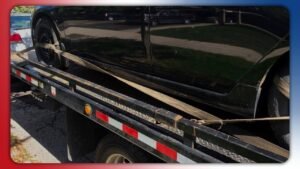
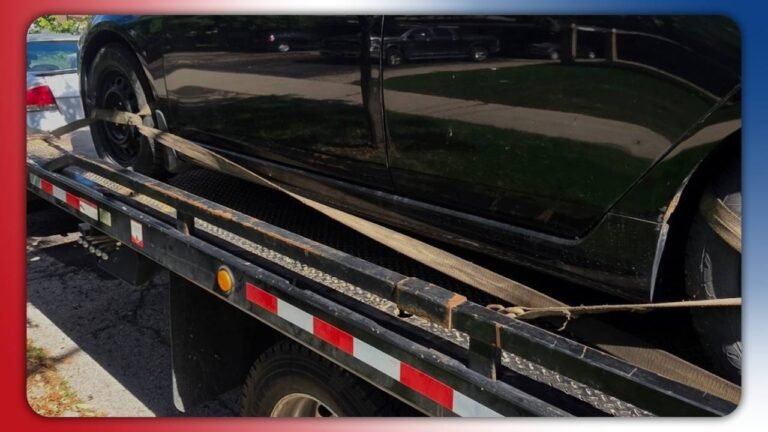
Choose a tow when you have no usable spare, damaged suspension, or a severely damaged rim. Ask the dispatcher to confirm suitable loading equipment. All-wheel-drive vehicles and low-clearance cars require extra equipment checks.
Review the company’s GTA towing service options when tire replacement cannot restore movement. A Flat Tire on the Highway becomes a transport problem when continuing would damage the car. Provide your preferred repair destination before the truck arrives.
Tire Damage, Spare Tires, and Driving Limits
Do not continue highway driving on a completely flat tire. A Flat Tire on the Highway creates heat, damages sidewalls, and threatens steering control. Only move the vehicle the minimum distance needed to reach immediate safety.
Puncture, Sidewall, and Rim Damage
A nail in the centre tread sometimes permits a professional repair after inspection. A sidewall cut usually requires tire replacement. Rim distortion, exposed cords, and severe vibration require professional assessment before driving.
Do not inject sealant into a visibly torn sidewall. A Flat Tire on the Highway involving a shredded tire needs more than inflation.
Temporary Spare Restrictions
A compact spare differs from a full-size replacement tire. Many compact spares specify 80 km/h (50 mph) as a maximum speed. Other limits vary by manufacturer, vehicle weight, and spare design. Read the spare label and owner’s manual before departure.
Use the nearest suitable repair shop instead of resuming a long highway trip. Avoid heavy loads, sharp turns, and abrupt braking while using a temporary spare. Recheck tire pressure after installation when your manual recommends a pressure check.
Toronto and GTA Highway Assistance Dispatch Details
Give dispatch an exact location, vehicle description, and description of tire damage. A Flat Tire on the Highway can delay assistance when the driver reports only a highway name.
Location Details That Help Responders
Share the highway number, travel direction, nearest interchange, and available kilometre marker. Name recognizable landmarks when available, such as a service centre or bridge. Provide your live location only when sharing can occur safely.
Mention a left shoulder, right shoulder, ramp, or blocked lane. The safety situation determines whether ordinary roadside assistance can approach. A Flat Tire on the Highway near an interchange often requires more precise directions than a street address.
Vehicle Information and Safety Warnings
Report the make, model, year, drivetrain, and registration plate. Explain whether the flat affects the driver side or passenger side. Tell dispatch about passengers, wheel-lock keys, and the condition of your spare.
GTA Towing & Scrap Cars advertises help across Toronto, Scarborough, North York, and other GTA communities. Service availability depends on the current location and any restricted-zone rules. Ask the dispatcher to confirm the assigned vehicle and arrival details.
Towing Costs and Ontario Driver Rights
Request the operator’s published maximum rate schedule and a job-specific quote before accepting a voluntary tow. A Flat Tire on the Highway does not create one universal Ontario towing price. Distance, recovery equipment, and restrictions affect the service.
Service Quotes Without Invented Rates
GTA Towing & Scrap Cars lists tire changes and towing, but its reviewed service pages do not publish fixed prices. Ask whether your quote covers labour, mileage, recovery equipment, and a destination. Get the amount and service scope confirmed before dispatch.
Ontario requires certified towing operators to publish maximum rates for listed services. Operators cannot charge more than their submitted maximum rates. Restricted tow zones use their separate program fee schedule. Never confuse free scrap-car pickup with a free emergency tow.
Consent Forms and Destination Choice
Outside restricted zones and police-directed exceptions, Ontario drivers generally choose the towing company and destination. Request the operator’s certificate details and the maximum rate schedule. Read the consent form before signing.
Do not sign a blank towing form. Keep a copy of your consent, destination details, and itemized invoice. Ask for clarification before authorizing additional recovery or storage services.
Preventing a Flat Tire on the Highway Before Departure
Check tire pressure, tread, and emergency equipment before a longer drive. Preventive checks reduce avoidable puncture complications, although road debris still causes unexpected failures. A Flat Tire on the Highway becomes easier to manage when your spare and tools work.
Tire Pressure and Visible Damage
Check cold tire pressure against the vehicle’s door-jamb placard. Inspect tread for embedded nails, screws, cuts, and bulges. Examine all 4 road tires before an extended trip. Include the spare in your regular checks.
Do not judge pressure by appearance alone. Use a suitable gauge and replace missing valve caps. Ask a tire technician to inspect uneven wear or repeated air loss. Address warning lights before entering Highway 401 or the Gardiner Expressway.
Roadside Emergency Kit
Carry a charged phone, flashlight, reflective vest, gloves, and first-aid kit. Add a compatible spare, working jack, wheel wrench, and wheel-lock key when your vehicle requires them. Store the owner’s manual where you can reach it.
Do not place warning triangles on a dangerous highway shoulder just to complete a checklist. A Flat Tire on the Highway requires avoiding traffic exposure rather than collecting roadside equipment.
Quick-Reference Highway Tire Decision Checklist
Choose the safest next action before touching the damaged wheel. A Flat Tire on the Highway calls for 3 practical decisions: stop safely, assess location, and request appropriate help.
| Task | Timing | Method | Difficulty |
| Control vehicle | Immediately | Ease off accelerator; steer gently | Moderate |
| Reach safe stop | As soon as safely possible | Shoulder or nearby exit; hazards on | High |
| Assess exposure | After stopping | Check traffic and shoulder width from safety | Moderate |
| Identify tow zone | Before booking | Check Ontario 511 or ask dispatcher | Easy |
| Call help | After location check | 911 for danger; 511 for restricted-zone tow | Easy |
| Check spare suitability | Only at a safe location | Manual, tire label, proper tools | Moderate |
| Confirm service terms | Before voluntary tow | Rate schedule, consent, destination | Easy |
Frequently Asked Questions
Is it safe to change a flat tire on the highway shoulder?
No, not when traffic, limited space, or poor visibility puts you at risk. Request professional assistance from a safe position.
Should I call 911 for a flat tire on Highway 401?
Yes, when your vehicle creates immediate danger or blocks a travelled lane. Otherwise, use 511 inside restricted towing zones.
Can roadside assistance fix a flat without towing my car?
Yes, when you have a compatible spare and technicians can work safely. Severe rim damage or missing spares require other options.
Can I drive on a temporary spare after a highway flat?
Yes, within the manufacturer’s stated speed and distance limits. Many compact spares specify 80 km/h (50 mph) maximum speed.
Does GTA Towing & Scrap Cars provide roadside tire changes?
Yes. The company advertises tire changes, towing, and 24/7 roadside recovery across the GTA. Confirm dispatch availability for your location.
The Safest Next Step After a Highway Flat
A Flat Tire on the Highway demands a safe stop before any repair decision. Choose a roadside tire change only with suitable equipment and safe access. Request transport when wheel damage, restricted-zone rules, or traffic conditions prevent repair. For Toronto-area assistance, request roadside towing help from GTA Towing & Scrap Cars or call 647-473-6322. Confirm the service quote and location rules before dispatch.