
Vehicle storage after towing means a certified yard holds your vehicle until an authorized person collects or transfers the vehicle. In Ontario, published operator rates, access rights, notification requirements, and release procedures govern the process.
Start by confirming the yard address, vehicle status, daily rate, and earliest release time. Vehicle storage costs increase with each chargeable storage day, so record your retrieval request immediately.
Vehicle Storage After Towing in Ontario
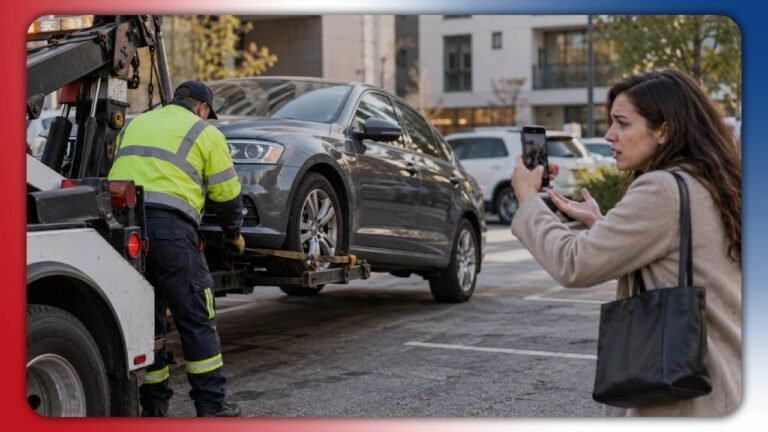
Vehicle storage after towing usually follows an accident, breakdown, parking removal, or police direction. Your next step depends on who ordered the tow and where the vehicle arrived.
A driver-authorized tow normally follows your chosen destination. A certified yard can receive your vehicle when immediate collection or workshop delivery cannot happen.
Police-directed storage follows the officer’s instructions. You cannot override a lawful hold by offering extra payment to the storage operator.
A repair shop does not automatically become a lawful paid storage operator. Verify certification whenever a facility charges separately for vehicle storage after towing.
Private towing and chosen destinations
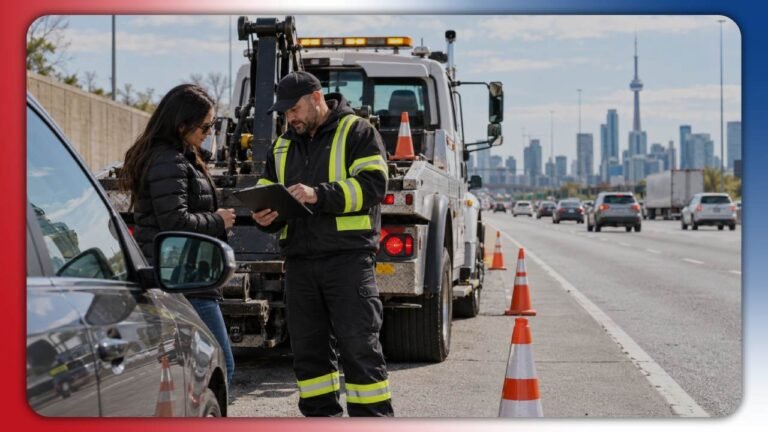
You generally choose the tow operator and destination when you arrange a regular tow. Ontario makes exceptions for police-directed towing and other authorized removals.
Write down the agreed destination before the truck moves. Keep your consent form, company name, certificate details, and any delivery confirmation.
Check the website’s Ontario towing regulations guide for the wider consent and documentation rules. Your storage decision remains separate from authorizing unrelated repair work.
Storage yards and police impound lots
A storage yard holds vehicles until lawful release. A police impound yard also follows instructions from the agency controlling the hold.
Ask whether the yard has received a release authorization. An operator cannot release a vehicle during an active legal impound merely because payment clears.
Record your vehicle identification number (VIN), licence plate, and the agency contact. Those details reduce delays when 2 operators share similar yard names.
Vehicle Storage After Towing Fees and Published Rates
Vehicle storage after towing has no single Ontario-wide daily dollar rate. Each certified storage operator must publish maximum charges and cannot exceed applicable published amounts.
Check the Ontario Ministry of Transportation (MTO) rates portal by operator name or certificate. Compare the correct facility address, date, vehicle category, and indoor or outdoor service.
Road Dominant Towing & Storage listed $120 daily outdoor storage for vehicles up to 6.5 metres (21.3 feet). Its listing identified a Brampton facility on October 20, 2026.
Recommended Roadside listed $145 daily outdoor storage for the same length category at a separate Brampton facility. These figures represent those operators’ published maximum rates, not GTA Towing & Scrap Cars prices.
Published rates can change. Request the actual storage provider’s effective schedule before estimating your invoice.
Daily storage and length categories
Vehicle length, storage type, and vehicle condition can change the published category. Compare outdoor passenger-car storage against outdoor passenger-car storage, not heavy-truck or damaged-electric-vehicle rates.
Ask the yard how its daily billing period works. Record the arrival timestamp, first billable day, pickup timestamp, and number of charged days.
Do not assume every yard starts a new day at midnight. A separate provincial Tow Zone Program specifies calendar-day billing for its contracted towing arrangements.
Vehicle storage after towing outside that program needs the operator’s applicable terms and published schedule. Request a written calculation before accepting any disputed day count.
Additional charges the law restricts
Ontario regulations forbid charges for preparing invoices, cleaning storage spaces, or ordinary movement inside a yard. Operators also cannot impose a standard retrieval charge just for releasing a car at the facility.
Yards cannot charge an access or release fee while the facility is open for business. Outside-hours access carries different rules and needs an eligible published charge.
Ask for separate line items when the invoice includes towing, storage, after-hours access, or additional transport. Vehicle storage after towing should never hide unrequested services inside a single unexplained total.
Ontario Vehicle Storage Rights in 2026
Ontario’s Towing and Storage Safety and Enforcement Act, 2021 (TSSEA) protects your access and billing transparency with certified operators. Vehicle storage after towing requires lawful documentation and truthful pricing.
Operators must provide an invoice before demanding payment. Storage businesses must accept accepted payment types, including cash, debit cards, credit cards, and mobile contactless payment.
The yard can generally require payment of lawful charges before releasing your car. A disputed bill does not automatically cancel the operator’s legal payment rights.
Storage notification and the 15-day rule
The storage operator must take steps to tell the owner where the vehicle is held and how to retrieve it. Written notice can reach you by email, personal delivery, mail, or courier.
Ontario guidance describes a 15-day limit in most cases when a storage operator fails to notify the owner. The owner’s payable amount then generally cannot exceed towing and storage costs for that period.
Do not treat 15 days as free storage or an automatic release date. Preserve notices and delivery records before challenging charges under the applicable legal conditions.
Access to belongings and personal property
You can normally collect personal belongings during regular business hours without paying an access charge. Police directions or another lawful restriction can limit access.
Bring photo identification and written owner authorization when another person collects your belongings. Ask staff to record the visit without removing vehicle parts or disrupting evidence.
Vehicle storage after towing does not give a yard permission to hold personal items to pressure payment. Report interference and preserve any written refusal.
Invoice delivery and vehicle release
Request an itemized invoice identifying the operator, services, dates, rates, taxes, and total. Compare each charge against the applicable published rate schedule.
After your retrieval request, the operator must make reasonable efforts to organize prompt release during business hours. Outside business hours, the operator must arrange release as soon as possible.
Give the yard a specific pickup request in writing. Note the reply time when vehicle storage after towing continues after your reasonable attempt to retrieve the vehicle.
Storage Timelines for Common Towing Situations
Vehicle storage after towing has no universal 24-hour release deadline. Availability depends on the storage facility, authorization, payment, and any lawful police restriction.
Your first useful deadline is the next available pickup arrangement, not an assumed grace period. Call the storage yard promptly and confirm a documented release plan.
Accident towing and insurance assessment
Collision damage often prevents immediate driving. Ask the insurer whether an adjuster must inspect the vehicle before a repair-shop transfer.
Request the inspection date, claim number, and transfer approval. Meanwhile, ask the yard for the current charge and next possible release slot.
Vehicle storage after towing can continue during an insurance claim. Insurance involvement alone does not promise reimbursement for every day or every operator charge.
Private property towing and short stays
Parking enforcement can authorize a vehicle removal under applicable local procedures. Confirm the property manager, parking authority, or towing contractor that authorized the move.
Check the posted parking rules and keep photographs from the location. Request the lot address and invoice before making a second trip.
Private property vehicle storage after towing does not automatically create a multi-day police impound. Ask whether any formal hold actually applies.
Police-ordered holds and restricted release
Police impound lengths depend on the legal reason and the order. Ask the issuing police service for the precise release date.
An authorized officer controls release during a legal hold. Storage charges can still accrue, subject to the applicable rules and billing restrictions.
Do not rely on another driver’s 7-day or 14-day experience. Different offences and police directions create different procedures and timeframes.
How to Locate Your Towed Vehicle
To locate your towed vehicle, identify the towing authority and request the exact storage address. Use your licence plate and VIN to confirm the correct car.
Contact the towing company first when you arranged the service. Contact the property manager when removal occurred from a private apartment or shopping-centre parking lot.
Call the relevant police service for a police-directed tow. Toronto, Peel, York, and Durham use different agencies, so confirm your vehicle’s actual pickup jurisdiction.
Request 4 details: operator name, storage address, telephone number, and vehicle arrival time. Write down the staff member’s name and your call timestamp.
Ask the yard to email its published storage rate and opening hours. Vehicle storage after towing becomes easier to manage when you receive the terms before travelling.
Do not go to the closest towing yard without confirmation. A nearby facility does not necessarily handle the tow you are trying to trace.
How to Retrieve Your Vehicle From Storage
To retrieve your vehicle from storage, confirm release authority, collect your documents, request the invoice, and book pickup. Arrange another tow when driving the vehicle would be unsafe.
Take government photo identification and proof that you own or can lawfully collect the vehicle. Ask the yard about written authorization for a family member or insurer representative.
Request any police release paperwork before attending a controlled impound. The issuing service can clarify additional documents linked to the actual hold.
Ask for the total owing and a complete itemized invoice before paying. Inspect dates and after-hours items against your written release request.
At pickup, photograph the vehicle, odometer, keys, and visible damage. Report fresh damage before departure and keep your signed receipt.
An undriveable vehicle needs a transport booking. GTA Towing & Scrap Cars describes insurance vehicle transport options for vehicle transfers involving insurers, dealers, and workshops.
Make the workshop address explicit and confirm arrival access. An unannounced late delivery can create another storage arrangement that you never intended.
Insurance Claims and Storage Cost Responsibility
Insurance payment depends on your policy, claim circumstances, coverage, and insurer instructions. Vehicle storage after towing does not automatically become a covered expense.
Tell the claims representative the yard name, arrival date, daily rate, and storage contact. Ask who can authorize transfer and who will settle the bill.
Request written confirmation of approved storage days, transport, and any inspection delay. Keep insurer instructions with the operator’s invoice.
A collision claim may involve a body shop, appraiser, and rental provider. Ask each business which company physically holds the vehicle and bills storage.
Some claim disputes involve vehicle storage after towing long after assessment. Ask your adjuster whether the insurer has issued a transfer instruction or settlement decision.
If an insurer declines a charge, request the reason and supporting policy wording. Do not assume the storage yard will waive the amount without agreement.
Repair authorization and storage consent are separate decisions. Read each form before signing, especially when the vehicle arrives at a combined repair-and-storage facility.
Storage Fee Disputes and Consumer Complaints
Dispute a vehicle storage after towing invoice by comparing dated charges with the operator’s official rate schedule. Keep both the bill and the published schedule from the relevant period.
Ask the storage operator to explain questionable line items in writing. Identify the service, date, rate, and reason for disagreement in 1 concise message.
Examples include an invoice preparation fee, a release charge during open hours, or an unrequested yard-to-yard move. Ontario rules restrict those specific charges.
Keep the consent form, proof of payment, photographs, emails, and attempted pickup records. Submit the documents when the operator cannot resolve the complaint.
Ontario’s Ministry of Transportation accepts towing and vehicle storage complaints concerning conduct and services from January 1, 2024 onward. Use the official Ontario towing-rights complaint process.
You can contact the ministry at towing@ontario.ca for questions about TSSEA consumer protections. The ministry assesses regulatory complaints but does not guarantee your individual reimbursement.
Seek independent legal guidance for contested liens, ownership, or court proceedings. Vehicle storage after towing can involve rights outside the towing regulator’s complaint process.
Quick-Reference Vehicle Storage Action Checklist
Use the following sequence when vehicle storage after towing starts. The times represent action targets for you, not statutory deadlines or guaranteed yard response times.
| Task | Timing target | Method | Difficulty |
| Locate your vehicle | As soon as possible | Confirm operator and exact address | Easy |
| Verify published rate | Before payment | Check MTO portal and yard schedule | Easy |
| Confirm release status | Before visiting | Ask yard and police when relevant | Moderate |
| Collect release documents | Before collection | Bring identification and authorization | Easy |
| Review final invoice | Before paying | Compare charge dates and line items | Moderate |
| Arrange safe transfer | Before departure | Book suitable towing for unsafe vehicles | Moderate |
Keep one digital folder for consent, rates, invoices, photographs, and insurer messages. Vehicle storage after towing disputes become harder when each party relies on different dates.
Give your insurance adjuster the same document set. Clear records help everyone confirm who authorized each move and who received the vehicle.
Frequently Asked Questions
Can a storage yard charge more than its published maximum rate?
No. Ontario storage operators cannot exceed their applicable published maximum rates. Check the operator’s certificate and rate schedule before payment.
Can I collect belongings before paying storage charges?
Yes, generally. Ontario protects reasonable access to personal belongings during business hours. A police restriction can change permitted access.
Does every towed car have a fixed 15-day storage deadline?
No. The 15-day notification rule concerns charge limitations in most non-notification cases, not a universal pickup deadline.
Will insurance pay for vehicle storage after towing?
Not automatically. Your insurer decides coverage under your policy and claim circumstances. Ask for written approval of storage and transport.
Can I drive a damaged car directly out of the yard?
Not safely in every case. Check brakes, tyres, steering, leaking fluids, and visible structural damage. Request professional towing when driving poses a risk.
Vehicle Release and Safe Towing Support
Vehicle storage after towing demands clear rate checks, fast communication, and documented release requests. Record the yard address, verify charges, and confirm authority before collection. For damaged vehicles across Toronto and the Greater Toronto Area, contact GTA Towing & Scrap Cars about accident vehicle towing services. Ask dispatch to confirm pickup arrangements, destination access, and the applicable quote.