
Ontario towing regulations 2026 require certified operators, informed towing consent, published maximum rates, and itemized invoices. Changes effective April 1 and July 1, 2026 also updated highway-zone rules and operator requirements.
You can usually choose your tow provider and destination outside designated restricted zones or an authorized police direction. Keep your forms, confirm the company certificate, and review every charge before payment.
Ontario Towing Regulations 2026: Key Changes in Force
Ontario towing regulations 2026 build on the Towing and Storage Safety and Enforcement Act, 2021 (TSSEA). The province introduced core consumer protections in 2024 and revised the rate structure in 2025. New provisions took effect during 2026.
The rules govern tow operators, tow truck drivers, and vehicle storage operators. You gain clearer information about service authorization, company identity, and billing. The changes do not create one fixed provincial price for every tow.
April 1 Roadside Assistance and Tow Zone Changes
On April 1, 2026, Ontario expanded the statutory definition of towing services to include roadside assistance services. Separate exemptions still determine which obligations apply to a particular service. A battery boost and a police-directed tow can follow different procedures.
The same date brought changes to restricted towing zone provisions. Authorized operators receive specific permissions to serve controlled highway sections. A separate contractor cannot offer towing inside those sections without the required authority.
Check Ontario’s current legislation when a roadside service presents an unusual billing or consent issue. Older government guidance sometimes describes narrower roadside assistance coverage.
July 1 Certification and Truck Marking Updates
On July 1, 2026, Ontario strengthened certification qualifications and expanded disqualifying criminal records. The amended rules also address shareholders and certain staffing relationships. Tow businesses must avoid engaging individuals with disqualified, suspended, or cancelled certificates unless certification becomes valid again.
Updated truck-marking requirements make company identity easier to inspect. On equipped pickup tailgates, certificate numbers must stand at least 7.5 centimetres (approximately 3 inches) high. Ontario encouraged education-first enforcement for markings through September 29, 2026. The marking obligations still applied from July 1.
Ontario towing regulations 2026 therefore combine older driver protections with newer operator oversight. Ask for credentials before agreeing to a non-emergency tow.
Ontario Towing Regulations 2026: Your Rights Before a Tow
Ontario towing regulations 2026 generally let you approve your towing company, destination, and documented service. Police-directed removal and restricted highway zones create exceptions. You should identify the exact exception before accepting an unfamiliar truck.
Consent to Tow and Written Rate Schedule
Ontario towing regulations 2026 require an operator to show maximum rates and customer rights before requesting consent. Review the completed Consent to Tow document before signing. The document should identify the operator, driver certificate, and selected destination.
Do not sign empty spaces or accept verbal promises that contradict the written document. Request an unaltered copy before the vehicle leaves or immediately afterward, as permitted by provincial requirements.
Police orders and certain prepaid membership arrangements have specific consent exemptions. You still benefit from documenting the vehicle destination and the responding business.
Choosing the Operator and Destination
You can ordinarily select your repair garage, home address, or collision reporting destination. Tell the driver your preferred address before loading begins. Ask the driver to confirm any change immediately.
A tow operator must follow the applicable destination directions and use the most direct route. An inspector or police officer can direct a different response for safety, investigation, or impoundment.
Ontario towing regulations 2026 protect your decision from pressure by unsolicited accident-scene operators. Decline a service you never requested unless a lawful exception applies.
Provincial Certificates and Operator Verification
Ontario requires provincial certification for tow businesses, tow truck drivers, and vehicle storage providers, subject to defined exemptions. You should verify a business before sharing vehicle keys or accepting transport.
Visible Company Name and Certificate Number
Under Ontario towing regulations 2026, check the operator’s name and government certificate number on the tow truck. Ask the driver to produce a tow driver certificate. Compare the presented details with your consent document and invoice.
The 2026 markings rules specify clearer placement and visibility requirements. A branded truck alone does not prove current certificate status. A valid number and consistent business identity provide stronger checks.
Certification Checks Before Service
Use Ontario’s online published rates and certificate status information to research an operator. Confirm the exact legal or operating name. Check the same operator’s published maximum rates.
Ask the dispatcher whether the truck belongs to the quoted company. Request confirmation before agreeing to subcontracted service. Record the driver’s name, vehicle plate, and certificate number when safe.
Ontario towing regulations 2026 also limit misleading advertising and operating under undisclosed identities. Report inconsistent credentials instead of arguing beside moving traffic.
Maximum Towing Rates and Itemized Charges
Ontario towing regulations 2026 require published operator-specific maximum rates, not one universal towing fee. You should compare the actual invoice against that operator’s rate schedule. The province can review unreasonable submissions.
Public Maximum Rate Schedules
Ontario towing regulations 2026 require applicable businesses to submit maximum rates to the Ministry of Transportation (MTO). Businesses must provide their schedule before requesting towing consent. Operators cannot exceed their published maximum for a covered service.
The Toronto towing price guide offers website-published market estimates and common towing factors. Treat those figures as guidance, not a confirmed booking price. Request the applicable maximum rate schedule and a written quote for your vehicle.
Your invoice must identify services and individual charges before the operator requests payment. Compare towing distance, permitted equipment, and authorized recovery work. Ontario rules prohibit fuel surcharges and charges for unnecessary work.
Basic, Intermediate and Advanced Towing
Ontario’s rate framework identifies 3 towing categories: basic, intermediate, and advanced. A normal accessible passenger-car tow generally falls within basic service. Intermediate service involves additional qualifying work, such as certain repositioning or recovery tasks.
Advanced recovery covers circumstances like overturned vehicles, off-road positions, or multiple recovery trucks. Equipment type and recovery conditions affect authorized rate categories. A flatbed alone does not automatically prove advanced recovery.
The driver should explain each billed category using the actual work performed. Ontario towing regulations 2026 do not permit charging for work never delivered.
Payment Choices and Billing Records
Pay using an accepted option, such as debit card, credit card, or cash. The operator cannot force one accepted method over another. Request a payment receipt showing the business name and the amount collected.
Keep a photo or digital copy of the invoice with your insurance records. Ask for a written explanation when a charge differs from the published maximum. Avoid treating an estimated online cost as the legally binding operator schedule.
Accident Towing Rules and Collision Scene Safety
Ontario towing regulations 2026 restrict unsolicited activity at collision scenes and require compliance with emergency personnel. Protect your safety before comparing providers or discussing repairs.
The 656-Foot (200-Metre) Collision Scene Restriction
Tow truck drivers generally cannot stop, park, or solicit towing within approximately 656 feet (200 metres) of a highway collision. A request from police, an inspector, or a person involved creates a statutory exception. Restricted-zone authorization still controls access where applicable.
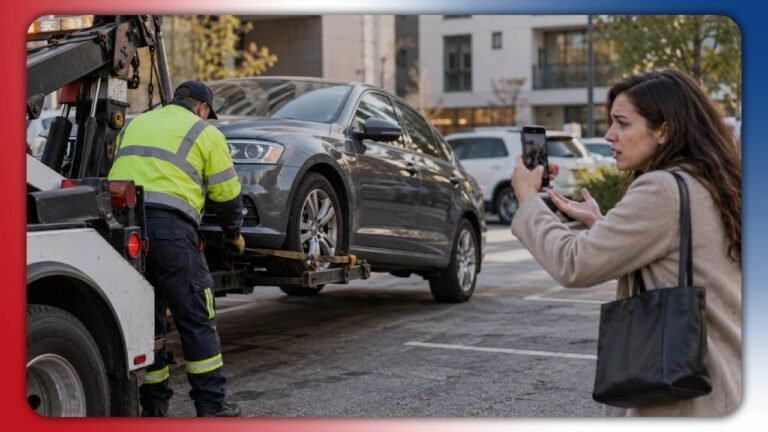
Photograph an unsolicited truck only from a safe location. Never cross active lanes to record a licence plate. Keep attention on vehicles approaching the shoulder.
A driver who ignores lawful directions from a police officer or firefighter faces enforcement action. Ontario towing regulations 2026 do not authorize accident chasers to override emergency traffic control.
Police Directions and Vehicle Recovery
Call 911 when a crash presents injuries, immediate danger, or a vehicle blocking a travelled lane. Follow responding officers’ directions about road clearance. Emergency responders decide when moving the vehicle serves public safety.
When permitted, ask your chosen provider about accident vehicle towing support and the destination you prefer. The company describes collision-centre and inspection-facility transport across the Greater Toronto Area (GTA).
Keep photographs of damage, collision details, and the truck’s identifying information. Report the accident through the applicable police or collision reporting process.
Restricted Tow Zones on GTA Highways
Ontario towing regulations 2026 preserve special dispatch rules on designated provincial highway sections. The Ministry’s Tow Zone Program identifies controlled routes around the Greater Toronto and Hamilton Area.
Authorized Providers and Highway Boundaries
A restricted towing zone allows only authorized providers to offer designated services. The program identifies 15 operational zones and covers major corridors. Highways 401, 400, 403, 404, 427, and the Queen Elizabeth Way include designated segments.
Check the current Ontario 511 map for exact boundaries and authorized operators. Restrictions do not apply to every interchange or roadway in the GTA. Highway authorization takes priority over an ordinary private towing preference.
911, 511 and Direct Dispatch
Call 911 for a crash, an emergency, or a stopped vehicle within a travelled lane. Call 511 for towing when safely stopped inside a restricted provincial tow zone. Outside restricted zones, contact your selected towing business directly when conditions permit.
The official Tow Zone Program guidance explains dispatch and approved storage yards. Tell the dispatcher the highway number, travel direction, nearest exit, and vehicle position.
Ontario towing regulations 2026 require drivers in restricted zones to follow authorized arrangements. Do not invite an unauthorized operator into a controlled segment.
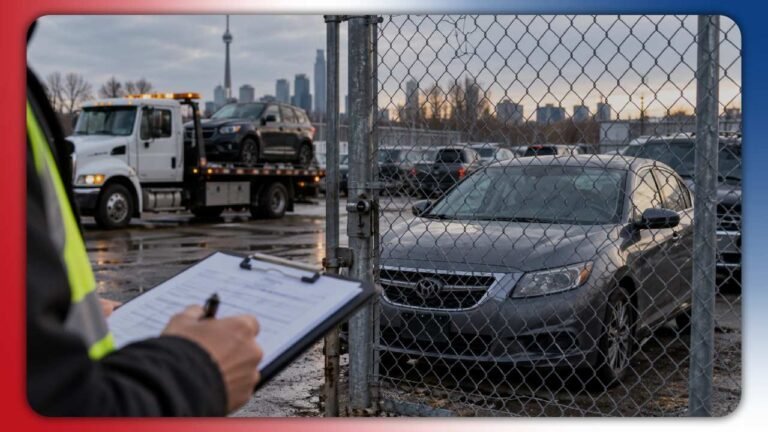
Vehicle Storage Rules and Release Rights
Ontario towing regulations 2026 also protect your ability to find, access, and retrieve a stored vehicle. Storage operators must maintain certifications and tell owners where the vehicle is held.
Storage Notice and Retrieval Access
Ontario towing regulations 2026 require storage operators to provide the yard address and retrieval procedure. Ask for its telephone number, opening hours, and posted maximum storage rates. Record the arrival date for later billing checks.
A storage provider must make reasonable efforts to release a vehicle promptly during opening hours. Outside-hours collection follows separate access conditions. Storage operators can sometimes charge an authorized extra amount for an outside-hours release.
Ontario guidance limits certain storage bills when the operator fails to notify the owner within 15 days. The exact limitation depends on the circumstances.
Personal Property and Storage Liens
You can ordinarily collect personal items from a stored car without a retrieval fee during regular business hours. Police restrictions can limit access during investigations. Ask the yard to explain any denied access in writing.
Ontario law also recognizes storage liens against the vehicle. An operator can lawfully demand payment before releasing a vehicle when a valid lien applies. Free belongings access does not automatically cancel towing or storage charges.
Ontario towing regulations 2026 separate the right to retrieve belongings from the process of releasing the vehicle. Save every payment record and storage notice.
Billing Disputes, Complaints and Fraud Warning Signs
Ontario towing regulations 2026 give you a provincial complaint route for concerns arising from towing and storage services. Collect evidence early and compare claims against official records.
Evidence to Save After the Tow
Record the company name, driver name, truck certificate, and vehicle plate. Photograph the completed consent form, maximum rate schedule, invoice, and receipt. Save dispatch messages and your selected drop-off address.
Watch for warnings such as an unrequested truck, pressure to sign blank forms, or unexplained charges. Another warning involves referrals to repair businesses you never requested. Drivers must not direct customers toward legal or health services.
Ask for written corrections before paying disputed amounts when conditions permit. Do not obstruct a lawful police-directed vehicle removal.
Filing a Ministry Complaint
Use Ontario’s official complaint portal when Ontario towing regulations 2026 appear violated. The Ministry of Transportation accepts evidence about overcharging, certificate concerns, and operator conduct. The provincial office lists towing@ontario.ca for inquiries.
Document the event date and your attempts to contact the business. Explain the charge or behaviour clearly. Attach files proving the operator’s published maximum and the invoice difference.
Ontario towing regulations 2026 allow provincial oversight, but complaints do not automatically void valid invoices. Contact police when someone threatens your safety or you suspect a crime.
Tow Preparation Checklist for Ontario Drivers
Ontario towing regulations 2026 become easier to apply when you save operator details before an emergency. Build a short checklist for your phone and vehicle documents.
Driver Actions at a Safe Roadside Location
Move to a safe position when your vehicle can move without increasing danger. Turn on hazard lights and follow emergency personnel. Tell your dispatcher the exact location and your vehicle’s condition.
Ask for the business name, company certificate, rate schedule, and estimated dispatch details. Confirm your destination and keep copies of approved forms. Wait away from traffic whenever a safe location exists.
The table identifies useful tasks rather than guaranteed response times. A safe scene takes priority over completing paperwork immediately.
| Task | Timing | Method | Difficulty |
| Check roadside safety | Immediately | Stop safely; call 911 for danger | High |
| Verify tow operator | Before consent | Compare certificate and company name | Low |
| Review maximum rates | Before signing | Read the published rate schedule | Low |
| Confirm drop-off point | Before loading | Record the full address | Low |
| Save payment evidence | Before and after payment | Keep invoice and receipt | Low |
| Report a disputed charge | After the tow | Submit records to Ontario MTO | Moderate |
Matching Recovery Equipment to Vehicle Conditions
Give the dispatcher specific details about your car, including damaged wheels, drivetrain, or restricted access. For example, an all-wheel-drive car needs handling appropriate to the manufacturer’s instructions. A damaged axle can require specialist equipment.
Describe obstacles using clear measurements. An entrance measuring 6 feet 6 inches (1.98 metres) can limit equipment clearance. Confirm height and access before dispatch rather than assuming every truck fits.
Ask the driver which recovery method suits your vehicle and location. Ontario towing regulations 2026 require services to reflect actual work, not unnecessary equipment.
Frequently Asked Questions
Can I choose my towing company in Ontario? Yes. You usually choose the provider and destination. Restricted towing zones and authorized police directions create exceptions.
Do I need to sign a towing consent form? Yes, usually. Review the completed form and rate schedule. Police-directed towing and certain prepaid arrangements have exceptions.
Are towing rates fixed across Ontario? No. Operators publish their own maximum schedules under provincial rules. Check the specific company’s rates before consenting.
Can I collect belongings before paying storage fees? Yes, normally. Storage businesses must permit free access during regular business hours, subject to lawful restrictions.
Does every tow truck serve Highway 401? No. Restricted sections require authorized companies. Call 511 for towing inside a designated zone when safely stopped.
Final Reminder and GTA Towing Support
Ontario towing regulations 2026 protect your right to informed consent, visible certification, and transparent billing. Verify the provider, keep complete records, and follow controlled-highway directions.
GTA Towing & Scrap Cars provides emergency towing and collision transport in the GTA. For a safe service discussion, visit its towing and recovery services page and request the applicable rate schedule before booking.