
Choose a licensed tow truck company Ontario regulators certify, then check its maximum rates and written consent terms. Ask for the driver’s certificate, an itemized quote, and the destination you select. Those checks protect your vehicle and your money.
A breakdown on Highway 401 or a collision in Scarborough creates urgent decisions. You still have important rights under Ontario law. The right company explains credentials, equipment, and payment without pressuring you. Use the following checks before authorizing a tow anywhere in the Greater Toronto Area (GTA).
Ontario Towing Licence Rules for 2026
Ontario requires provincial certification for commercial towing operators and drivers. The Towing and Storage Safety and Enforcement Act, 2021 (TSSEA) establishes the framework. A licensed tow truck company Ontario customers hire must follow certification, safety, and customer protection requirements.
The 3 Certificates You Should Recognize
Ontario issues 3 certificate types: tow operator, tow driver, and vehicle storage operator. The operator certificate covers the business providing towing. The driver certificate identifies the person operating the truck. A storage certificate covers a business offering regulated vehicle storage.
Operator and storage certificates require annual renewal. Driver certificates require renewal every 3 years. Ask which company will actually transport your car. Check the tow operator’s certificate separately from the driver’s document.
Provincial Rules Versus Older Municipal Licences
Ontario transferred towing oversight from municipalities to the province in 2024. An old municipal badge alone does not establish current provincial certification. A licensed tow truck company Ontario motorists select must satisfy current provincial requirements.
Tow operators also need commercial vehicle registration or qualifying equivalent documentation. Provincial requirements include liability and vehicle protection insurance. Certification establishes legal eligibility, not a promise of perfect service. Read the contract and verify equipment independently.
How to Verify a Licensed Tow Truck Company Ontario
To verify a licensed tow truck company Ontario drivers can trust, match its legal identity and certificate status. Complete verification before the truck loads your vehicle whenever circumstances allow.
Confirm the Operator Number Through Ontario’s Portal
Open Ontario’s Towing and Vehicle Storage Published Rates portal. Search for the operator using its displayed company details. Review the certificate status and published maximum rates for the applicable service region.
The operator name and certificate number should match the truck and paperwork. Different trading names require extra attention. Ask dispatch to explain the legal business name before accepting service. A promotional claim of being licensed does not replace provincial verification.
Check the Driver’s Certificate on Arrival
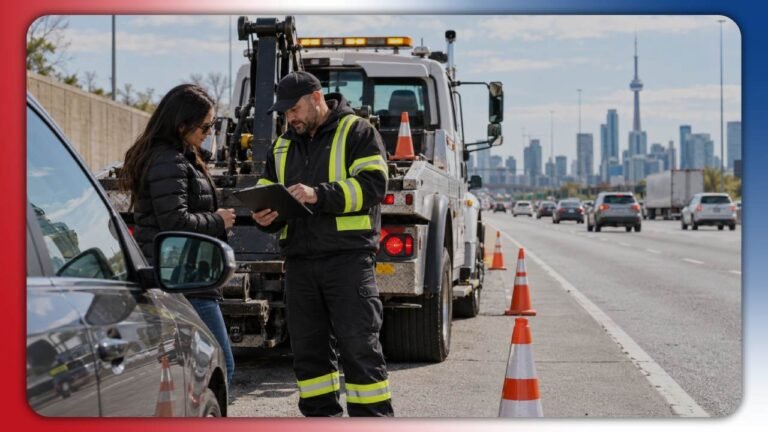
Request the driver’s tow driver certificate. Ontario requires drivers to present proof when customers ask. Compare the driver’s identity with the consent document before signing.
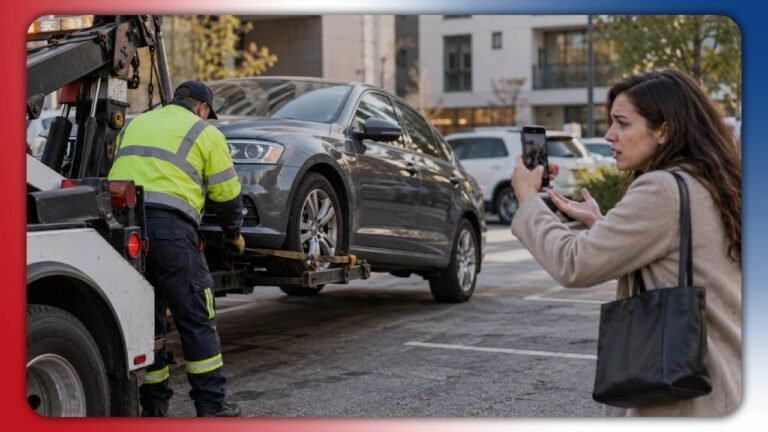
Photograph the truck markings and licence plate from a safe location. Record the driver’s first name and certificate number. These details help you track a licensed tow truck company Ontario officials can identify during a complaint.
Licensed Tow Truck Company Ontario: Pricing and Quotes
Compare the published maximum rate schedule with the specific services the operator proposes. Ontario requires operators to disclose rates before towing. A licensed tow truck company Ontario customers contact cannot exceed its filed maximum rate for a listed service.
Separate Published Maximums From Your Actual Quote
Maximum rates establish the charging ceiling, not an automatic final invoice. Ask for the planned towing service, destination, equipment, and applicable charges. Request written confirmation of your estimated total.
A standard roadside tow differs from winching, collision recovery, and vehicle storage. Confirm any extra service before authorization. Ontario prohibits certain charges, including fuel surcharges. Check the current provincial rules rather than accepting unexplained line items.
Compare Ordinary Towing With Free Scrap Pickup
GTA Towing & Scrap Cars advertises free towing for qualifying scrap vehicle removal. That offer concerns selling an unwanted vehicle for recycling. The website does not establish one universal price for ordinary roadside towing.
Review its available towing services to separate accident recovery, roadside assistance, and scrap collection. Ask dispatch for a service-specific quote before scheduling. A licensed tow truck company Ontario residents use should identify the exact job, not merge unrelated promotions.
Written Consent and Your Towing Rights
You generally choose the tow company and destination, subject to police directions and restricted highway zones. The driver must explain the required documentation before your vehicle moves.
Read the Consent to Tow Form Before Signing
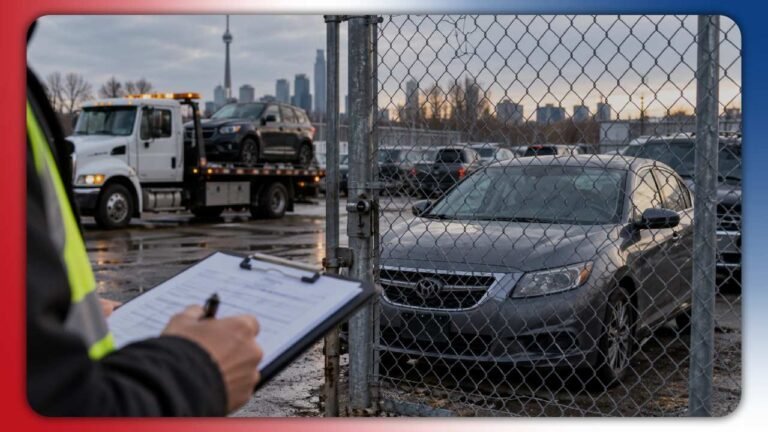
Review the Consent to Tow form and maximum rate schedule before approving service. Confirm your chosen destination, operator name, certificate details, and requested work. Never sign blank paperwork.
Keep an unchanged copy of the completed consent form. Ontario rules contain specific exemptions, including certain membership arrangements. Ask for an explanation when a driver claims an exemption. A licensed tow truck company Ontario drivers choose should welcome careful document review.
Demand an Itemized Invoice and Receipt
Ask for an itemized invoice before payment. Match each charge against the work you authorized and the published schedule. Obtain a receipt once you pay.
Ontario requires operators to accept multiple payment forms. A cash-only demand deserves scrutiny. Save written estimates, payment records, and messages. Clear documentation makes billing disagreements easier to investigate.
Choosing the Correct Tow Truck for Your Vehicle
Match the truck to your vehicle’s drivetrain, damage, and loading restrictions. A licensed tow truck company Ontario vehicle owners select should ask about vehicle condition before dispatch.
Flatbed, Wheel-Lift, and Recovery Equipment
A flatbed carries the vehicle completely above the road. A wheel-lift raises one axle while another axle rolls. Recovery equipment, including winches and recovery straps, helps move vehicles from difficult positions.
Tell dispatch whether your vehicle has all-wheel drive (AWD), a damaged wheel, or low ground clearance. Ask the operator to follow manufacturer towing instructions. Incorrect lifting can harm steering, tyres, drivetrain components, or body panels.
Check Special Vehicle Handling Needs
Motorcycles require suitable wheel chocks and secure tie-downs. Electric vehicles (EVs) require manufacturer-specific recovery precautions. Trucks with unusual weight or equipment need suitable recovery capacity.
Share your vehicle’s make, model, and year. Mention locked wheels, flat tyres, or damaged suspension. A licensed tow truck company Ontario customers consider should confirm safe loading equipment before committing to the pickup.
Accident Towing and Restricted GTA Highway Zones
Prioritize personal safety and follow emergency instructions after a collision. Your normal right to select an operator has limits inside designated highway tow zones.
Follow Police and Highway Tow Zone Directions
Ontario’s Tow Zone Program covers designated sections of major highways. Only authorized program operators may provide towing inside those restricted zones. You regain ordinary provider choice after the vehicle exits the zone, subject to lawful directions.
Request identification and the applicable program fee schedule. Do not assume every tow truck can respond to Highway 401 or Highway 400 incidents. Contact emergency services when a collision creates an immediate hazard.
Protect Your Repair-Shop Choice After a Collision
Ask where the vehicle will go before approving transport. Your preferred repairer might be a dealer, collision centre, or independent garage. Tell the driver your selected destination in writing.
Review GTA Towing & Scrap Cars’ accident vehicle towing information for its stated collision services. Confirm availability and site access with dispatch. A licensed tow truck company Ontario drivers call must respect destination and referral rules.
Insurance, Damage Records, and Storage Choices
Check the operator’s coverage and document your vehicle before loading. Insurance protection and clear custody records reduce uncertainty after transport.
Ask About Operator Insurance and Vehicle Protection
Ontario requires qualifying tow operators to carry at least $2 million in liability coverage. Separate minimums apply to consumer vehicle and cargo protection. Ask what insurance covers damage during loading, transit, and unloading.
Photograph visible scratches, tyres, windows, and wheels when conditions permit. Keep the tow operator’s name and final delivery address. A licensed tow truck company Ontario consumers evaluate should explain its damage reporting procedure.
Confirm Storage Access and Release Details
Ask whether the tow ends at a repair shop or storage yard. Review the storage operator’s certificate and published maximum rates when storage applies. Request operating hours and the release process.
Ontario protects reasonable access to your vehicle and personal belongings, subject to lawful restrictions. Save the inventory of belongings you retrieve. Never assume roadside towing includes free overnight storage.
Towing Scams and Warning Signs
Reject high-pressure sales tactics and unexplained changes to your agreement. A licensed tow truck company Ontario customers trust provides verifiable records and clear consent.
Watch for 4 Common Warning Signs
- Question unsolicited arrivals after an accident.
- Challenge refusals to show certificates or rates.
- Reject blank consent documents.
- Dispute surprise services that you never requested.
Do not accept an unwanted body-shop referral. Ask whether the operator benefits from any recommended facility. Ontario requires disclosure of referral interests. Avoid letting a driver make repair decisions without your permission.
Preserve Evidence and Report Concerns
Keep photographs of the truck, your vehicle, and completed paperwork. Save quotes, call records, invoices, and payment receipts. Note the time and location of any disputed interaction.
Report suspected violations to Ontario’s Ministry of Transportation. Include the operator’s certificate number and a factual event timeline. Documentation helps investigators identify a licensed tow truck company Ontario regulators oversee.
Local Coverage Across Toronto and the GTA
Confirm that the operator serves your exact pickup location and destination. Regional advertising does not guarantee immediate truck availability.
Check Toronto, Scarborough, and Surrounding Cities
GTA Towing & Scrap Cars lists Toronto, Scarborough, North York, Etobicoke, Mississauga, Brampton, Vaughan, and Markham. Its coverage information also names Pickering, Ajax, Whitby, Oshawa, Oakville, and Burlington.
The company lists a Scarborough base at 3091 Eglinton Avenue East. GTA coverage depends on dispatch conditions and the requested vehicle service. A licensed tow truck company Ontario drivers call should confirm the exact address before quoting arrival expectations.
Match Service Availability to the Requested Job
Ask whether dispatch can provide roadside towing, battery assistance, fuel delivery, or scrap pickup at your location. Tell the dispatcher about restricted parking, underground access, or collision damage.
Website promotions cannot replace a confirmed service appointment. Request the operator’s current arrival estimate directly. A licensed tow truck company Ontario customers hire should distinguish availability from a guaranteed arrival time.
How to Compare Towing Operators Before Calling
To compare towing operators before calling, assess documentation, rates, equipment, and service coverage in the same order. Keep a short record for each candidate.
Use a 6-Point Quick-Reference Checklist
Use the table to sequence decisions without inventing service prices or response guarantees. Difficulty reflects the customer’s effort, not the tow’s technical difficulty.
| Task | Timing | Method | Difficulty |
| Verify operator certificate | Before dispatch | Ontario rates portal | Easy |
| Review rate schedule | Before consent | Compare published maximums | Easy |
| Confirm truck equipment | During booking | Describe vehicle condition | Easy |
| Check driver certificate | At truck arrival | Request driver proof | Easy |
| Approve destination | Before loading | Review signed consent | Moderate |
| Check final invoice | Before payment | Match charges to agreement | Moderate |
Prepare Your Call With 5 Details
Gather 5 details: exact pickup location, vehicle description, mechanical condition, desired destination, and accessible contact number. Identify nearby landmarks, including a motorway exit or parking entrance, when relevant.
Ask the dispatcher to repeat the vehicle and destination details. Record the operator’s name and estimated arrival window. A licensed tow truck company Ontario drivers select should describe the next step clearly.
Roadside Safety Before the Tow Truck Arrives
Protect yourself before checking paperwork or inspecting the tow truck. A licensed tow truck company Ontario drivers request needs accurate location details and safe access.
Identify Your Position Without Leaving a Safe Area
Move your vehicle to a safe position when the vehicle remains drivable and road conditions permit. Activate hazard lights and follow police instructions. Avoid standing in active traffic lanes.
Share a highway exit, direction of travel, and nearby road marker with dispatch. Send your location through your phone when practical. A licensed tow truck company Ontario motorists contact can use those details to identify an appropriate approach.
On a busy highway, Ontario advises staying inside the vehicle when remaining inside is safer. Never walk behind a stopped car in moving traffic. Call emergency services immediately for injuries, fire, or an obstructed high-speed lane.
Document Vehicle Condition Before Loading
Take photographs only from a safe position. Capture the wheels, bumpers, roof, and visible collision damage. Do not enter traffic to obtain an extra photograph.
Remove essential belongings when you can do so safely. Tell the driver about leaking fluids, damaged tyres, or a locked steering column. Ask how the operator will secure the vehicle.
Keep your documents and phone accessible. A licensed tow truck company Ontario residents choose should explain the loading process without requesting unsafe participation. Document the destination and operator details before transport begins.
Frequently Asked Questions About Ontario Towing
Does Every Ontario Tow Operator Need Certification?
Yes. Ontario requires tow operators to hold provincial certification unless a specific exemption applies. Verify the operator’s current certificate through Ontario’s official portal.
Can You Choose Your Tow Truck Company After an Accident?
Yes, generally. You retain provider choice outside restricted highway zones and lawful police directions. Confirm the destination before authorizing transport.
Must a Driver Show a Tow Driver Certificate?
Yes. Ontario requires tow drivers to present their certificate when a customer requests proof. Check the name before signing the consent form.
Does Free Scrap Pickup Mean Every Tow Costs Nothing?
No. Free scrap vehicle removal describes an eligible vehicle sale and pickup. Ordinary towing requires its own published rates and service quote.
Does Auto Insurance Automatically Cover Every Tow?
No. Your policy determines collision towing benefits, breakdown coverage, and reimbursement limits. Call your insurer before assuming the invoice qualifies.
Book Verified Towing Assistance Across the GTA
Choose a licensed tow truck company Ontario drivers can verify, then confirm the specific service and the final destination. GTA Towing & Scrap Cars advertises 24/7 towing, roadside assistance, accident recovery, and scrap vehicle pickup. Review its GTA service coverage and call +1 647-473-6322 for your actual quote. Ask for certification details and the applicable maximum rate schedule before consenting.